
FIKA NYC / THE COFFEE JOURNAL
Cappuccino vs espresso: understand the cup before you order
Learn how espresso becomes a cappuccino, and compare texture, size, caffeine, milk choices and home preparation.
Originally published Editorially updated
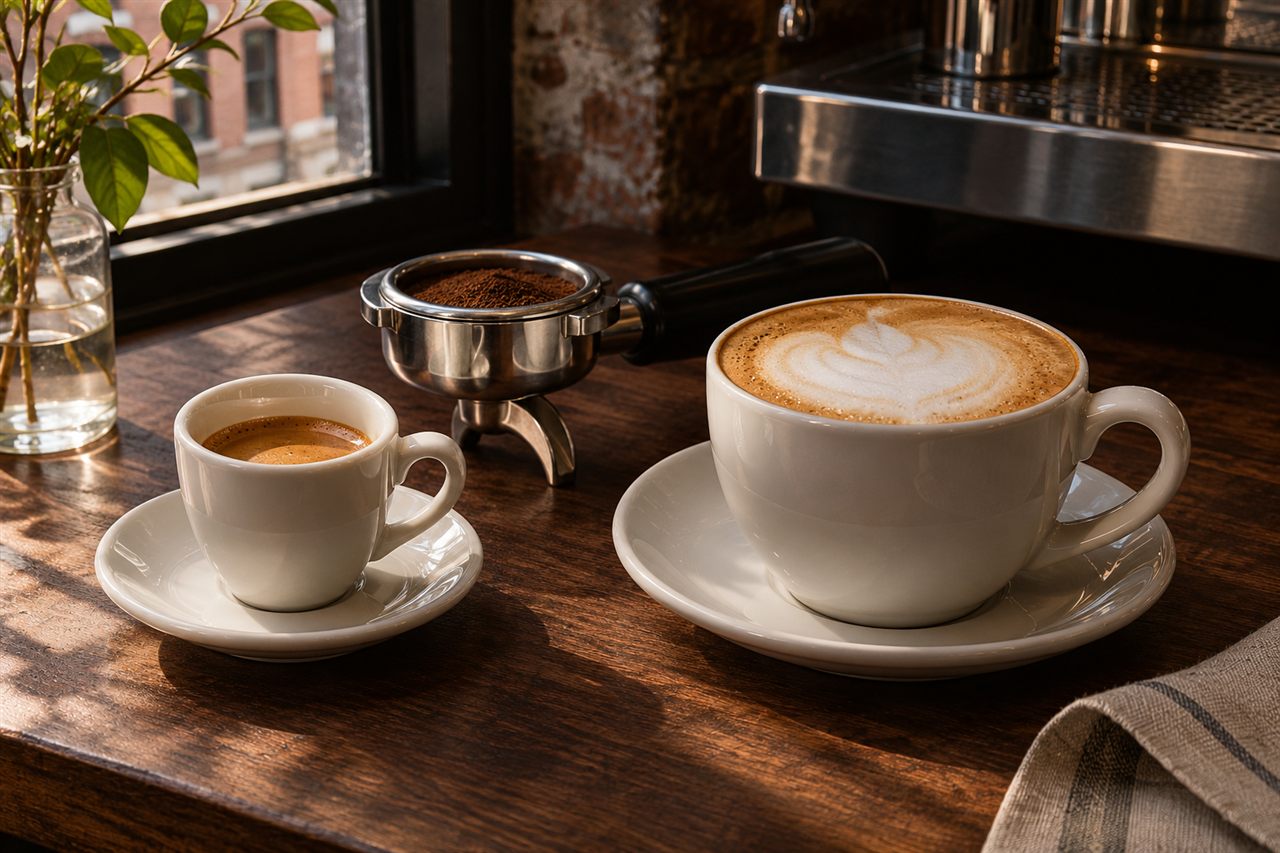
Espresso and cappuccino are connected, not competing kinds of coffee bean. Espresso is a small, concentrated coffee made by a particular brewing method. A cappuccino uses espresso as its base and adds steamed, textured milk. The decision is mostly about whether you want to experience that coffee directly or through a softer, milk-led cup. Size, shot count and cafe recipe matter more than a rigid rule about which drink is “stronger.”
The base drink is espresso
Espresso is made by passing water through a compact bed of finely ground coffee under pressure. It is served in a small volume because the extraction is concentrated. The National Coffee Association's espresso guide explains the method and the equipment involved. A shot can be enjoyed on its own or used as the starting point for drinks with water or milk.
A cappuccino begins with an espresso shot or shots, then adds steamed milk and foam. This does not create a new extraction method; it changes the finished drink. The milk increases volume and changes flavor and texture. A cafe may use a different number of shots or a different cup size from the one you expect, so the menu's recipe is more useful than a universal ratio.
The beans may be the same in both drinks at one cafe. If so, tasting an espresso and a cappuccino side by side can show what the milk contributes. At another cafe, different beans or blends may be used, adding another variable. Ask the barista when you want to compare like with like.
Milk changes the texture as much as the taste
Steamed milk gives a cappuccino sweetness, body and a foam layer that changes how the drink feels on the first sip. Good foam is integrated rather than a dry cap sitting apart from the coffee. The Specialty Coffee Association's explanation of milk microfoam describes why milk forms stable bubbles when it is steamed and textured. That technique is a large part of the cappuccino experience.
Espresso without milk presents its aroma, acidity, bitterness and body more directly. Some people love that concentrated profile; others prefer it moderated. A cappuccino can let the same espresso's chocolatey or nutty notes come through while softening edges. The actual result depends on the coffee, the milk and the barista's preparation.
Plant-based alternatives can be used where offered, though their flavor and foaming behavior vary by product. If an ingredient matters because of an allergy or dietary requirement, ask the cafe which milk it uses and how it handles shared steaming equipment. A visual foam pattern alone cannot tell you what is in the cup.
Size and caffeine are separate questions
An espresso looks small and tastes intense, but a cappuccino made with the same espresso dose does not gain caffeine from adding milk. Its total caffeine comes mainly from the espresso base. A larger cappuccino may use two shots where a small espresso order uses one, however, and a cafe can vary recipes by cup size.
The National Coffee Association's caffeine FAQ
Milk changes the drink's calories and other nutrition, but the amount depends on portion size, milk type and any sweetener. A plain cappuccino is not the same as a flavored version with syrup. If you need exact figures, use the cafe's ingredient and nutrition information for the cup you are ordering rather than a generic estimate.
How to taste the difference fairly
Choose a cafe whose espresso you enjoy and order a straight espresso and a cappuccino made from the same beans. Sip the espresso first while it is fresh, then the cappuccino. The espresso lets you notice the coffee's concentration and finish; the cappuccino shows how milk changes its balance. Let the drinks cool slightly if they arrive too hot to taste comfortably.
Notice whether the cappuccino's foam feels silky and integrated, and whether you can still identify the underlying coffee. A very large, milky version may feel closer to a latte; menu usage varies. If the cafe lists its own drink sizes, use those rather than assuming every cappuccino follows an identical recipe across shops.
You can ask for a single or double shot where the cafe permits. Keep the shot count the same when comparing caffeine or flavor contribution. That simple control is more helpful than judging from the physical size of the cup.
Making them at home
Making espresso at home asks for an espresso-capable brewer, a suitable grind and a repeatable recipe. For cappuccino, you also need a way to heat and texture milk. Some espresso machines have a steam wand; other setups use a separate frother. Equipment and milk alternatives behave differently, so follow the maker's instructions. Our espresso machine guide helps you compare features if you are considering a purchase.
Begin by preparing an espresso you would enjoy on its own. Then add textured milk in a cup size you like. If the cappuccino tastes washed out, first check the ratio between the espresso and milk. If the milk masks the coffee completely, a smaller milk portion or a different bean may help. Work from your preferred taste rather than copying a single “correct” recipe without regard to cup size.
Keep the steam wand and milk vessel clean. Refrigerate unused milk promptly and follow its packaging. The FDA's food-storage guidance
Which should you order?
Order espresso when you want a short, direct expression of the coffee or a quick small drink. Order cappuccino when you want the same type of coffee base with the sweetness and texture of steamed milk. If you enjoy the idea of a longer black espresso drink, an Americano is a third path; if you want more milk, ask about the cafe's latte.
There is no universal winner. You may choose espresso after a meal and cappuccino on a slow morning, or prefer one consistently. The useful comparison is between actual recipes at your cafe, especially shot count, milk choice and serving size. Ask a simple question at the counter and choose the cup you will enjoy.
Common questions
Does a cappuccino contain espresso?
Yes. Espresso is the coffee base of a cappuccino. The finished drink adds steamed, textured milk and foam, so it has a different texture and size from an espresso served alone.
A cafe may vary its shot count and milk volume. Ask about its recipe if you are comparing the cappuccino with a single or double espresso.
Is a cappuccino stronger than espresso?
Espresso is more concentrated because it is served without the added milk. A cappuccino can taste gentler even when it contains the same shot. “Stronger” can refer to flavor, concentration or caffeine, and those are different measures.
For total caffeine, compare the number of espresso shots and the coffee used. Adding milk does not add caffeine, but a larger cappuccino may contain more shots.
Is cappuccino the same as a latte?
Both are espresso-based milk drinks, but cafes usually build them with different milk volumes and textures. A cappuccino commonly emphasizes foam and a more compact cup, while a latte often feels more milk-forward. Exact recipes vary by cafe.
If the distinction matters to you, ask for the menu's cup sizes and shot counts. The name alone is not a reliable guarantee of one fixed proportion everywhere.
Can I make a cappuccino without a steam wand?
You can texture heated milk with a separate frother if you do not have a steam wand, though the foam may differ from cafe microfoam. Use a suitable vessel, follow the frother's instructions and avoid overheating the milk.
You still need an espresso base for a conventional cappuccino. If you use filter coffee instead, you can make an enjoyable milk coffee, but it will have a different brewing foundation.
This article draws on published brewing guidance and explains common preparations. It does not claim a hands-on equipment test, a universal recipe or a health benefit. Check the exact cafe menu and equipment instructions for your own cup.