FIKA NYC / THE COFFEE JOURNAL
Decaf vs regular coffee: choose by caffeine and taste
Compare decaf and regular coffee by caffeine, processing, flavor and brewing so you can choose the cup that fits your routine.
Originally published Editorially updated
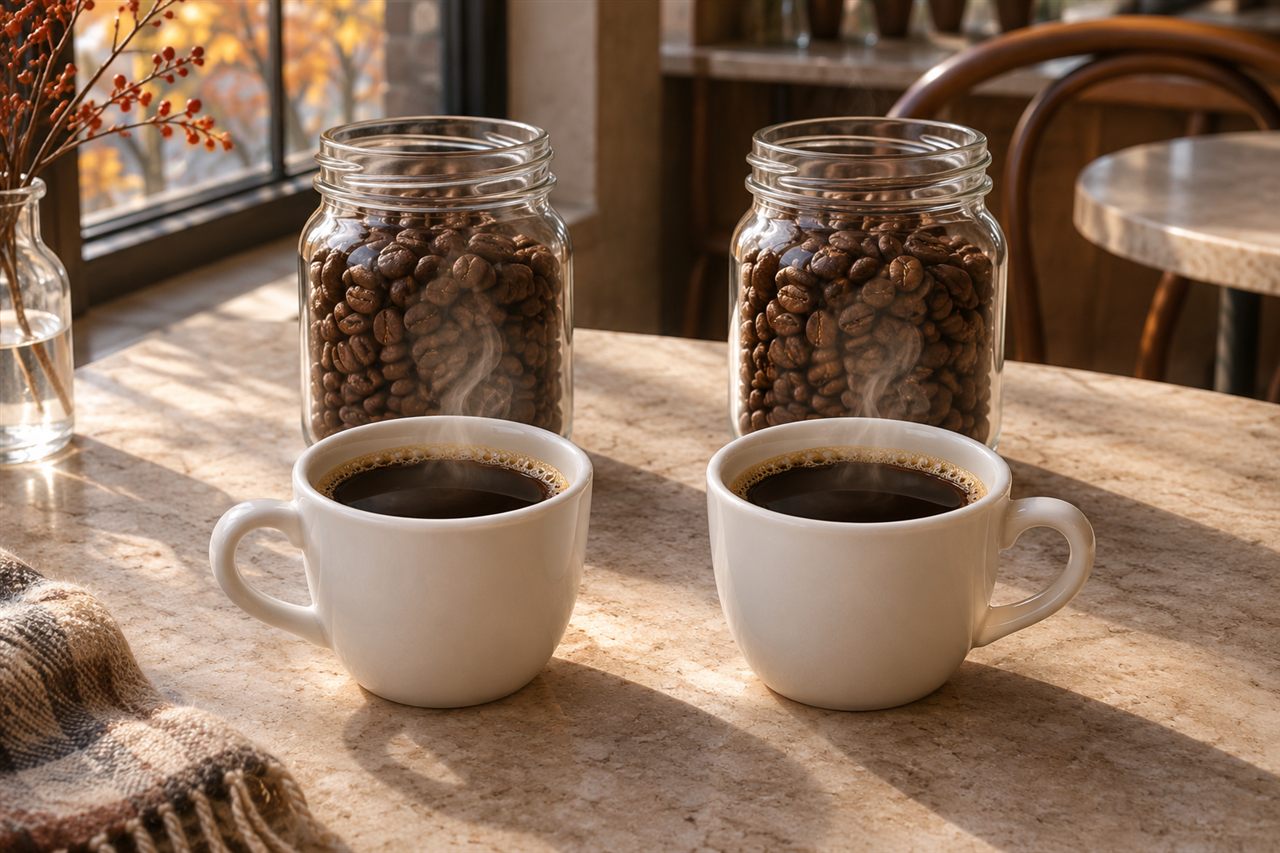
Decaf and regular coffee begin with coffee beans and can be brewed with the same equipment. The main distinction is that most of the caffeine has been removed from the beans used for decaf before roasting. That does not make decaf caffeine-free, nor does it tell you how a particular cup will taste. A useful choice starts with how much caffeine you want, then considers the bean, roast and brewing method you enjoy.
What decaf changes
Decaffeination happens to green coffee before the beans are roasted. The National Coffee Association's decaf overview describes processes that remove most of the caffeine while leaving beans that can still be roasted, ground and brewed as coffee. A bag marked decaf is therefore coffee, not a coffee-flavored substitute. Regular coffee skips that caffeine-removal stage.
The methods differ. Water-based systems, solvent-based systems and carbon dioxide approaches all aim to remove caffeine while retaining as much of the coffee's character as possible. The Specialty Coffee Association's explanation of decaffeination chemistry describes how dissolving and filtering caffeine work in practice. A process name on a bag tells you how the beans were treated; it does not by itself guarantee that one coffee will taste better than another.
After decaffeination, the familiar choices still matter: coffee origin, roast, freshness, grind and recipe. You can buy whole-bean or ground decaf, prepare it as filter coffee or espresso, and serve it black or with milk. If you are changing from a favorite regular coffee, compare beans and roast as well as the decaf label.
How much caffeine remains?
Decaf contains substantially less caffeine than regular coffee, but typically some remains. The U.S. Food and Drug Administration's caffeine guide gives 2–15 milligrams as a typical range for an eight-ounce cup of decaf. It also explains that caffeine in a specific coffee varies by product and serving size. A larger decaf drink, repeated cups or a blend of regular and decaf can change your total intake.
A regular brewed cup generally has much more caffeine, yet there is no universal number for all coffees. The National Coffee Association's caffeine FAQ highlights cup size and preparation as variables. Espresso, filter coffee, concentrates and ready-to-drink products should be compared by the actual serving rather than by a single category average.
If a low caffeine target matters for a medical reason or strong sensitivity, read the manufacturer's information and ask a cafe about its ingredients. Do not assume that “decaf” means zero caffeine. A healthcare professional can help with limits that apply to your circumstances; this article cannot set an individual safe amount.
Flavor depends on more than the label
It is possible to enjoy an excellent decaf and a disappointing regular coffee, or the reverse. Caffeine contributes to bitterness, but coffee flavor is far more complex than caffeine alone. Decaffeination can change some compounds, while growing, roasting and brewing can have just as visible an effect on what reaches your cup. A dark roast may conceal subtler differences that a lighter roast reveals.
For a fair comparison, buy coffees with a similar roast level and brew them with the same method at a comparable strength. Taste without milk or sweetener first. Look for sweetness, acidity, body and finish rather than trying to identify which is “real.” If you enjoy both, consider using regular coffee when you want caffeine and decaf when you want the coffee ritual without as much of it.
Some decaf tastes different because it is an entirely different bean from the regular coffee being compared. A cafe may source a special decaf blend and a separate house espresso. Ask what is being served before attributing every flavor difference to the removal process. Matching the beans precisely may not be possible, but understanding the menu helps.
Brewing decaf at home
Start with the instructions for your brewer and the coffee supplier's grind recommendation. Decaf whole beans can be ground just before use, as regular beans can. Because decaf is still coffee, your usual drip machine, pour-over cone or espresso setup may work. Equipment-specific settings and the bean's roast can require small adjustments, so taste a batch before making a large change.
Keep the water, dose, grind and cup size consistent when comparing bags. If a decaf tastes thin, first check whether you used enough coffee for the final volume and whether the grind suits your brewer. If it tastes harsh, a different grind, brew time or roast may help. Changing only one variable at a time makes the next cup easier to interpret.
Store beans according to the package in a clean, sealed container away from heat and moisture. Buy an amount you can use while it tastes fresh. For households with both kinds, mark the containers clearly: decaf and regular beans can look almost identical, and mixing them defeats a deliberate caffeine choice.
Ordering and shopping questions
At a cafe, ask whether decaf is available as espresso, filter coffee or both. A decaf Americano still starts with decaf espresso; a decaf latte also adds milk. If you prefer a half-caf drink, ask how the cafe combines its coffees and how many shots it uses. Recipes differ, so a menu name is not a reliable caffeine figure.
When shopping, look first for a roast and tasting profile you enjoy. Then check the decaffeination method if it is important to you. A label such as “water processed” describes a method, not a promise of caffeine-free coffee or a guarantee of a particular flavor. A small bag is a reasonable way to learn whether a new decaf works with your brewer before purchasing a larger quantity.
Price and availability can vary by shop. Do not assume the decaf choice is automatically inferior because there are fewer options on one menu. Specialty roasters increasingly offer distinct decaf coffees, and the practical test is still the cup you make or order.
Which should you choose?
Choose regular coffee when you want the caffeine as part of your routine and enjoy the beans on offer. Choose decaf when you want a much lower caffeine option while keeping the taste and preparation ritual of coffee. You can also keep both at home and choose by time of day or occasion, provided you remember that decaf is not completely free of caffeine.
Neither choice needs a blanket health verdict. People differ in caffeine sensitivity, and claims about medical effects require more context than a coffee comparison can provide. The practical questions are how much caffeine is in your actual serving, whether you like the flavor, and whether the drink fits your day.
Common questions
Is decaf completely caffeine-free?
No. The FDA says an eight-ounce cup of decaf typically contains 2–15 milligrams of caffeine. The exact amount can vary with the coffee and the serving. A larger cup or multiple cups can add up.
If you need to avoid caffeine entirely, decaf coffee may not meet that need. Ask the manufacturer or a qualified healthcare professional about your situation instead of relying on the word “decaf” alone.
Is decaf made from different beans?
Decaf begins as coffee beans, and many varieties and origins can be decaffeinated. The beans undergo a caffeine-removal process before roasting. The cafe's decaf may come from a different farm or blend than its regular coffee, which can affect taste.
Read the bag or ask the roaster about origin, roast and processing method. Those details help you compare actual coffees instead of assuming every difference comes from caffeine removal.
Can I use decaf in an espresso machine?
Yes, if the coffee is roasted and ground appropriately for the machine. Decaf is coffee, and it can be prepared as espresso. Your machine's instructions and the bean's grind will matter more than the decaf label by itself.
Expect to adjust the grind or recipe for a new bag, just as you would with a different regular coffee. Clean the grinder if you need to keep the two kinds separate for someone tracking caffeine intake.
Does decaf always taste weaker?
No. A decaf can be brewed at the same coffee-to-water ratio as a regular coffee and still have a full flavor. Some beans or processes may taste different, but roast, freshness and extraction also shape the result.
Compare two well-prepared cups of similar strength before deciding. If one seems thin, examine the recipe and the beans, not just the caffeine label.
This article draws on published brewing guidance and explains common preparations. It does not claim a hands-on equipment test, a universal recipe or a health benefit. Check the exact cafe menu and equipment instructions for your own cup.