
FIKA NYC / THE COFFEE JOURNAL
Espresso powder vs instant coffee: when each works best
Understand soluble espresso powder and instant coffee for baking and drinks, including substitutions, labels and caffeine considerations.
Originally published Editorially updated
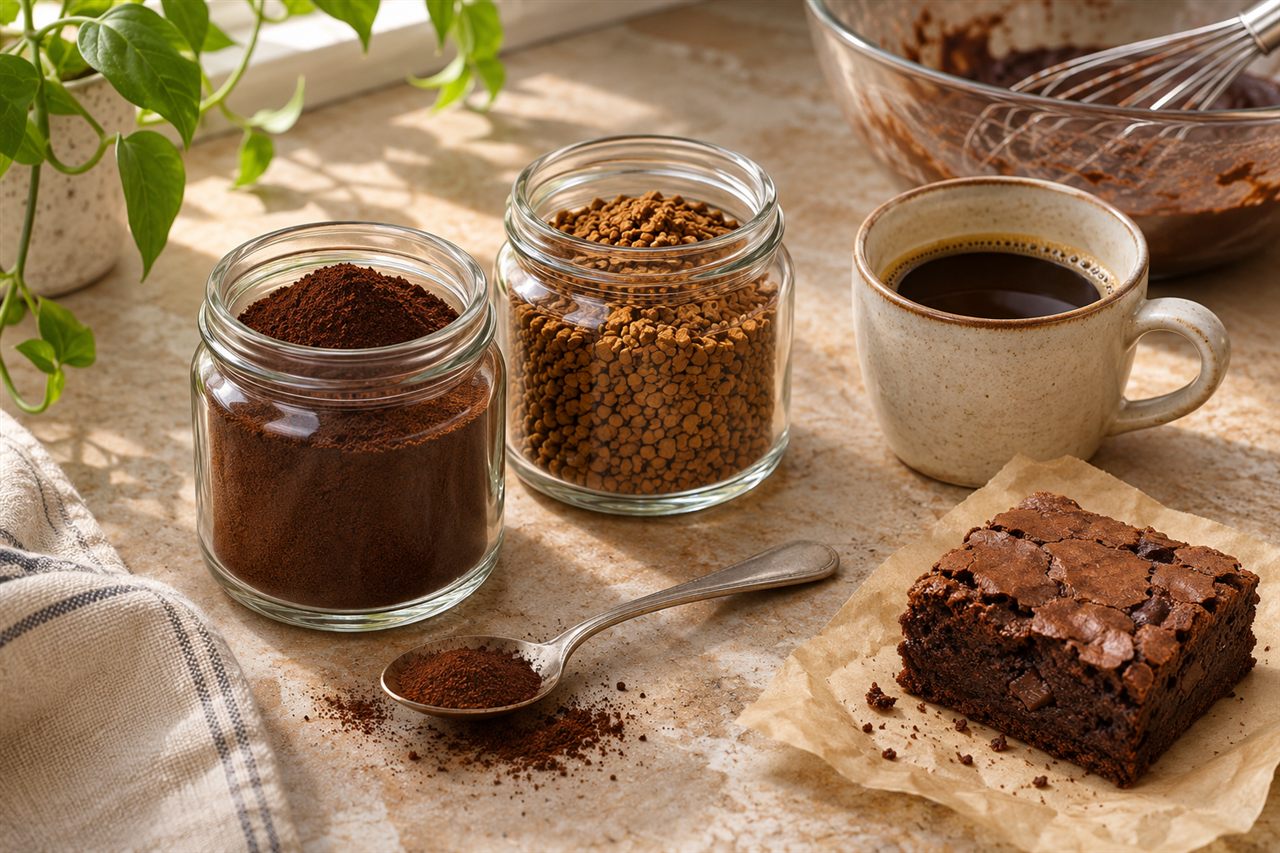
Espresso powder and instant coffee can both dissolve into a recipe, but their names describe different intended strengths and uses. Instant coffee is primarily a quick way to make a cup. A baking-focused espresso powder is usually used in small amounts to deepen chocolate or add a deliberate coffee note. There is also a third product—finely ground coffee for an espresso machine—that will not behave like a soluble powder. The label and the recipe matter more than the color of the granules.
Start with the label, not the jar
Instant coffee is brewed coffee that has been dried into a soluble form. Add water and it reconstitutes as a drink. The National Coffee Association's instant-coffee guide explains that preparation and why it is convenient. Granules or powder sold for drinking can vary in roast, flavor and recommended amount.
Products sold as espresso powder for baking are also intended to dissolve, but they are formulated or selected for a concentrated coffee flavor in small recipe quantities. King Arthur Baking's explanation of espresso powder describes its baking product as much more concentrated than its ordinary instant-coffee comparison. That is useful guidance for a baking recipe, but it is not a universal claim about every brand with “espresso” on the label.
Ground espresso beans are different. The National Coffee Association's espresso guide describes espresso as a brewing method that uses finely ground coffee and pressure. The dry grounds are not meant to disappear in water or cake batter. If the package says “ground coffee for espresso,” do not assume it can replace a soluble powder without gritty results.
What happens in a drink?
Instant coffee is the straightforward cup-making product. Follow the package's amount for the water volume you want, then adjust to taste. It can also be used in cold drinks after dissolving in a little warm water, if the manufacturer recommends that approach. A dark-looking granule does not tell you how much caffeine the finished cup will have.
Some baking espresso powders can be reconstituted, but the flavor may be intense or less balanced as a full mug. Read the product directions: a powder designed to season batter may not be the cup you want to drink every morning. Conversely, a mild instant coffee can make an enjoyable beverage while contributing too little coffee flavor to a chocolate recipe at the same teaspoon amount.
If your goal is a classic espresso shot, neither soluble product recreates pressure extraction or crema from an espresso machine. A convenient strong instant cup may be satisfying on its own terms, but calling it espresso does not change how it was made.
What happens in a bake?
In brownies, cakes and frostings, a small quantity of soluble espresso powder can add depth to chocolate or create a mocha note when the amount is larger. King Arthur Baking's espresso-powder product guidance gives examples of chocolate recipes in which its powder is used. The exact amount belongs to the recipe and product, so start there rather than adding several spoonfuls by instinct.
Instant coffee can sometimes substitute when a recipe calls for espresso powder, but expect a different strength and possibly a different texture or taste. King Arthur's baking article suggests a substitution for its own recipes; that is not a guaranteed conversion for every jar. Dissolving granules in the recipe's liquid may help distribute them, but do not add extra water without accounting for the batter's balance.
Try a small batch when changing ingredients, and record the brand and amount. This article explains published baking guidance; it does not claim that Fika tested these substitutes in every recipe. If the recipe maker says the espresso powder is optional, omitting it may be the simplest choice when you lack a suitable product.
Texture, storage and measuring
Fine powder disperses more easily through dry ingredients than larger granules, but both products need to be kept dry. Moisture can cause clumping and change how easily you measure a teaspoon. Close the package tightly and follow its storage instructions. Use a clean dry spoon so you do not introduce moisture into the jar.
Measure with the spoon size in the recipe. A heaped teaspoon and a level teaspoon are not equivalent, and concentrated powders can change flavor noticeably. If a recipe gives weights, weighing is a clearer way to repeat it. If it calls for brewed espresso instead of powder, the liquid amount is part of the recipe; swapping dry powder without adjusting other liquid is a different change.
Check the ingredient list if you need a plain coffee product. Some “coffee” or “cappuccino” mixes contain sugar, dairy ingredients or flavorings. Those mixtures may behave very differently in a bake and may not suit dietary needs. The product name alone is not enough information.
Do not forget the caffeine
Both products are made from coffee, so they can contribute caffeine. The amount in a teaspoon depends on the brand and how much coffee that serving represents. Baking a pan of brownies also divides the added powder across multiple portions. A blanket caffeine number for “espresso powder” would be misleading.
The U.S. Food and Drug Administration's caffeine guidance
Do not confuse ordinary espresso powder for baking with pure or highly concentrated caffeine powder sold as a supplement. The latter is a different product with serious safety concerns. Keep the ingredients in their original labeled containers, especially in a kitchen with similar-looking powders.
Which should you buy?
Buy instant coffee if you primarily want a quick cup and may occasionally add coffee flavor to recipes. Buy a baking espresso powder if a recipe calls for it or you routinely want a concentrated coffee accent in chocolate bakes. If you already own instant coffee, try the recipe maker's substitution guidance before buying a second jar.
For an actual espresso drink, look for beans and equipment suited to espresso extraction. Ground beans, soluble instant granules and baking powder serve different purposes. The right choice is the one that matches the instructions you are following and the flavor you want, with the label confirming what is inside.
Common questions
Can instant coffee replace espresso powder in brownies?
Sometimes. King Arthur Baking offers a substitution suggestion for its recipes, but instant coffees vary in flavor and concentration. A direct teaspoon-for-teaspoon swap may produce a weaker coffee note or a different taste.
Follow the recipe maker's advice first. If none is given, make a small batch or omit an optional espresso-powder addition rather than assuming an exact universal conversion.
Is espresso powder the same as ground espresso beans?
No. Soluble espresso powder for baking is intended to disperse into batter or liquid. Finely ground beans for an espresso machine are meant to be brewed and filtered, so they can leave grit if used as a powder substitute.
Check whether the package says “instant,” “soluble,” “for baking,” or “ground coffee.” Similar dark colors are not proof that the products perform the same way.
Can I drink espresso powder?
Some products can be dissolved as a drink, but baking-oriented espresso powder may be very strong or unbalanced at a full-cup dose. Use the manufacturer's directions and taste a small preparation before making a large mug.
If your goal is an easy daily coffee, ordinary instant coffee is designed for that purpose. Neither soluble powder is the same as a machine-extracted espresso shot.
Does espresso powder have more caffeine than instant coffee?
There is no reliable answer from the names alone. Caffeine per spoonful depends on the specific products, how concentrated they are and how much you use. In a dessert, the powder is also divided among servings.
Consult product information when caffeine matters. Do not infer caffeine from powder color or from a recipe's claim that a small amount is hard to taste.
This article draws on published brewing guidance and explains common preparations. It does not claim a hands-on equipment test, a universal recipe or a health benefit. Check the exact cafe menu and equipment instructions for your own cup.