FIKA NYC / THE COFFEE JOURNAL
Caffeine in coffee vs soda: compare the serving, not the name
Use a like-for-like caffeine comparison for brewed coffee and caffeinated soda, then check size, labels and added sugar in your actual drink.
Originally published Editorially updated
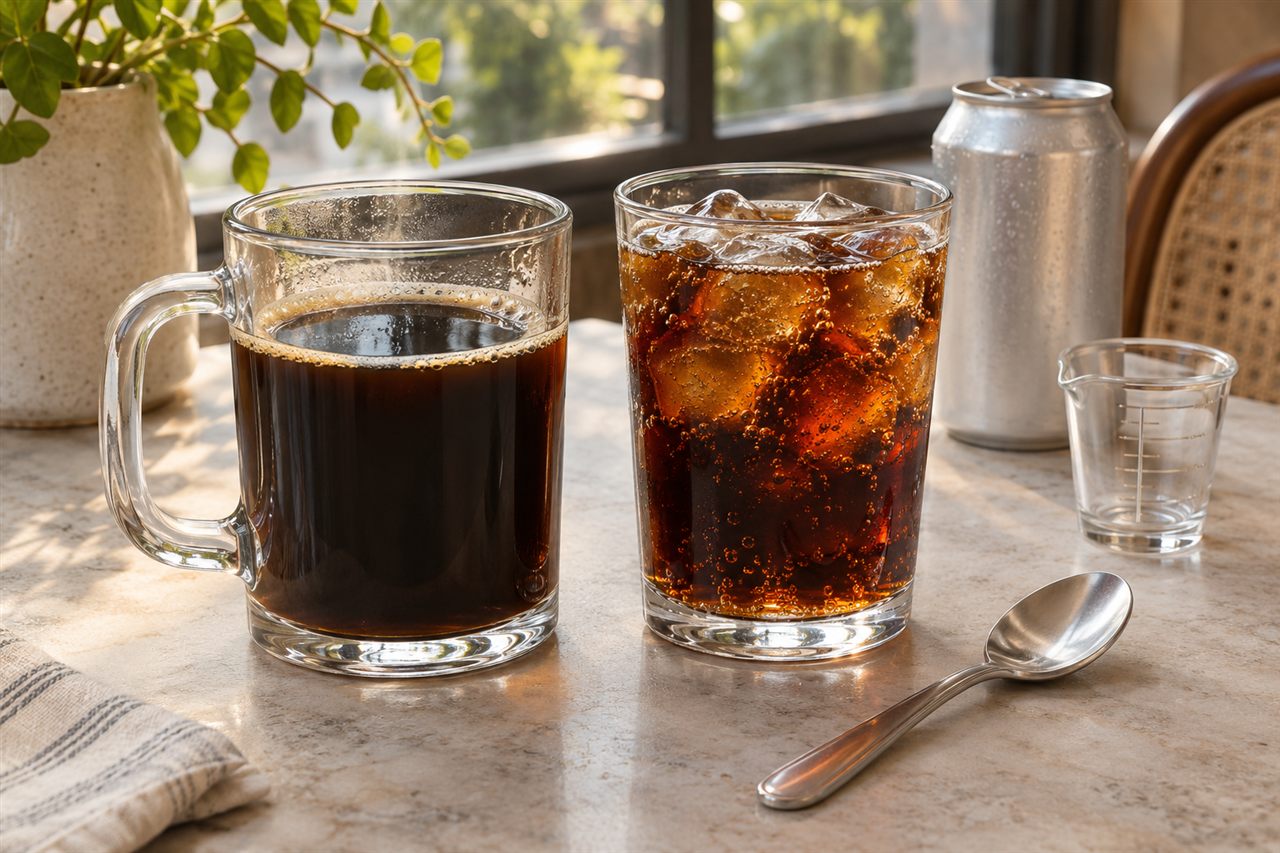
A cup of coffee generally has more caffeine than a typical caffeinated soft drink when both are compared at the same volume. That broad pattern is useful, but it is not a figure for the exact cup or can in your hand. Coffee recipes vary, soda brands vary, and containers are often different sizes. To make a sensible comparison, match the serving size, read the product information and separate caffeine from sugar and other ingredients.
Start with a like-for-like reference
The U.S. Food and Drug Administration's caffeine guide gives typical ranges for 12-fluid-ounce drinks. Regular brewed non-specialty coffee is listed at 113–247 milligrams of caffeine. Caffeinated soft drinks are listed at 23–83 milligrams. The ranges do not say that every coffee exceeds every soda; they show why a standard-size brewed coffee commonly contains more caffeine than a standard-size caffeinated soda.
The FDA also stresses that specific products and container sizes differ. A small coffee is not the same as a large cafe cup. A single can is not the same as a fountain drink or a large bottle. Compare total caffeine in the amount you will actually drink. If the package reports caffeine per serving, check how many servings the container holds.
These figures refer to brewed coffee and caffeinated soft drinks, not every item called coffee or soda. Espresso, cold-brew concentrate, ready-to-drink sweet coffee, caffeine-free soda and energy drinks need their own product information. Treating all of them as one category invites a misleading result.
Why coffee caffeine varies
Coffee's caffeine changes with the amount of coffee used, the bean, the brewing method, the cup size and any dilution after brewing. The National Coffee Association's caffeine FAQ
An Americano starts with espresso and added water; the water makes it longer without adding caffeine. A latte adds milk to espresso. Filter coffee is brewed directly into a larger serving. Those drinks can therefore have different amounts even when handed to you in similarly sized cups. Ask a cafe for its published caffeine values or shot counts when you need a closer estimate.
At home, measure your beans and final portion consistently. Changing the number of grounds or drinking twice the volume can matter more than a small difference between brands. Decaf coffee is another option for reducing caffeine, but it typically still contains some; our decaf guide
Why soda caffeine varies
Colas and other caffeinated soft drinks do not all use the same formula. Some sodas are caffeine-free. A diet version may have a different caffeine amount from its regular counterpart, even when the cans look nearly identical. A product's ingredient list and any voluntary caffeine statement are more relevant than a category average when choosing a specific drink.
The FDA notes that beverages and other packaged foods may provide caffeine information voluntarily, while added caffeine must appear in the ingredient list when used as a stand-alone ingredient. If a can does not show a clear milligram figure, the manufacturer may publish one. Do not guess from flavor, carbonation or color. A clear soft drink can contain caffeine, and a dark one can be caffeine-free.
Serving size deserves equal attention. A 20-ounce bottle contains more liquid than a 12-ounce can. If both use the same formula, drinking the whole bottle would mean more caffeine; the label may also use different serving conventions. Check both the amount per serving and the number of servings you consume.
Caffeine is not the only label detail
A plain black coffee and a regular sweetened soda differ in added sugar, but a sweetened coffee drink can also contain plenty of it. The Centers for Disease Control and Prevention's sugar-sweetened beverage guidance
Check the FDA's Nutrition Facts label guide when comparing serving size and added sugars on packaged drinks. A cafe drink may require its menu nutrition information or a question at the counter. Milk, syrup, cream and flavored toppings can all change a coffee's nutrition; diet soda usually uses different sweeteners from regular soda. This article does not rank those choices medically.
If you are trying to reduce caffeine and added sugar, those are two separate decisions. You might choose decaf black coffee, a caffeine-free soda or water, but read the actual product to confirm what is in it. An unsweetened drink is not automatically caffeine-free, and a caffeine-free drink is not automatically unsweetened.
A practical way to compare two drinks
First, write down the exact products and the amount you expect to drink: for example, a 12-ounce brewed coffee and one 12-ounce can, or a 16-ounce cafe coffee and a 20-ounce bottle. Second, find each product's caffeine information from its label, manufacturer or cafe. Third, compare the total for the full amount, not a per-ounce figure alone. Then check added sugar and other ingredients if those affect your choice.
When no exact caffeine number is available, use the FDA's typical ranges as context and acknowledge the uncertainty. Do not present a category range as a measured value for a particular cup. If you are sensitive to caffeine or have a medical reason to limit it, discuss a personal limit with a healthcare professional and avoid relying on a rough comparison.
Remember caffeine from the rest of your day, including tea, chocolate, supplements and medications. The FDA explains that caffeine from different sources still contributes to overall intake. A switch from soda to coffee may raise caffeine even if it lowers added sugar; the reverse switch may change both in another way. Read the whole day rather than one beverage name.
Which should you choose?
Choose the drink whose actual serving, flavor and ingredient list fit your preference. If the main goal is less caffeine, compare a decaf coffee with a caffeine-free soda using their labels. If the main goal is less added sugar, compare unsweetened versions. If you simply prefer coffee or soda, keep the cup or can size in view.
The important answer is specific: which coffee, which soda, how much of each, and what else is added? That is more reliable than declaring that coffee always wins on one measure or that all sodas are alike.
Common questions
Does coffee always have more caffeine than soda?
No statement covers every serving. The FDA's typical 12-ounce ranges put regular brewed coffee above most caffeinated soft drinks, but specific products and serving sizes vary. A small cup of coffee and a large soda are a different comparison.
Use a label, manufacturer figure or cafe information for the actual beverages you drink. Treat category ranges as context, not a guaranteed product result.
Is diet soda caffeine-free?
Not necessarily. “Diet” describes a sweetener or calorie formulation, not the presence or absence of caffeine. Some diet sodas contain caffeine and some are caffeine-free. Likewise, regular sodas differ by brand and flavor.
Look for a caffeine-free statement or caffeine information on the exact product. When the label is unclear, check the manufacturer's product page rather than relying on can color.
Is decaf coffee completely free of caffeine?
No. Decaffeination removes most caffeine, but decaf coffee usually retains some. The amount can vary with the bean and final serving, so a large or repeated decaf serving can contribute to your total.
If you need to avoid caffeine entirely, verify the product and discuss your circumstances with a qualified professional. The word “decaf” is a reduction claim, not a zero claim.
Does adding milk or ice change caffeine?
Adding milk, water or ice does not add caffeine to an already brewed coffee. It changes the drink's volume and the concentration you taste. If a larger drink also uses extra espresso shots or more brewed coffee, then its total caffeine can increase.
For a cafe order, ask about the coffee base and shot count. For a bottled drink, use the label's total per serving and check how much of the bottle you will consume.
This article draws on published brewing guidance and explains common preparations. It does not claim a hands-on equipment test, a universal recipe or a health benefit. Check the exact cafe menu and equipment instructions for your own cup.