
FIKA NYC / THE COFFEE JOURNAL
Cappuccino vs latte vs macchiato: a practical ordering guide
Compare cappuccino, latte and traditional espresso macchiato by milk, texture and size, and learn why some menu macchiatos differ.
Originally published Editorially updated
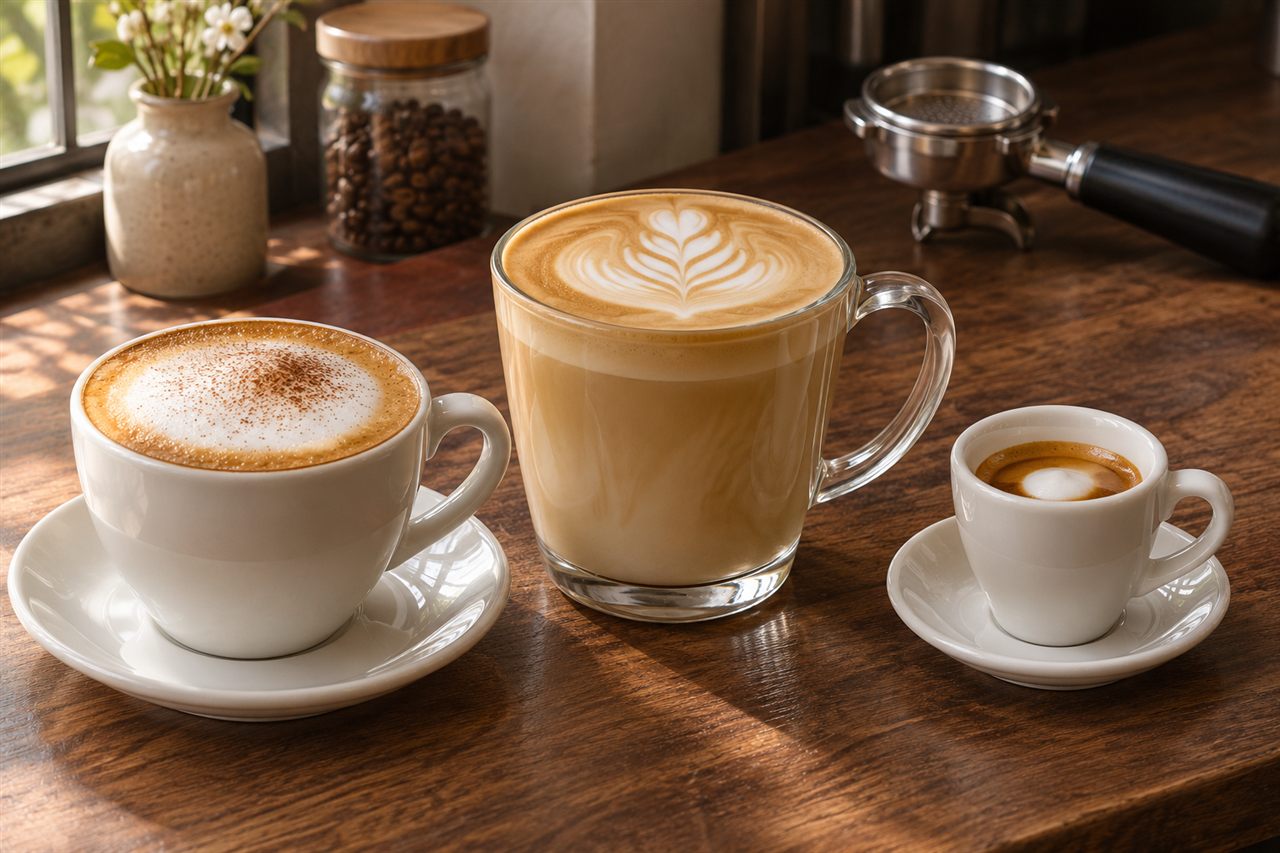
Cappuccino, latte and espresso macchiato all begin with espresso, yet they answer different requests. A cappuccino balances coffee with textured milk and foam. A latte usually gives more room to steamed milk. A traditional espresso macchiato keeps the drink small and marks the espresso with a little milk or foam. Recipes vary between cafes, and the word “macchiato” can also describe a much larger flavored drink. The surest way to choose is to ask about the cup, milk and shot count.
Start with their shared espresso base
The three classic drinks begin with espresso: coffee extracted in a small, concentrated serving using an espresso machine. The National Coffee Association's espresso guide explains the brewing method. Milk changes what you taste and how the cup feels, but it does not turn the original espresso into a different extraction method.
Shot count can vary. A small cafe may use a double shot in every milk drink; another may change the shots with cup size. That means two drinks with different amounts of milk can carry the same caffeine, while two similarly sized drinks can differ if their espresso doses differ. The menu or barista can tell you more than an assumed universal formula.
The bean or espresso blend matters too. A bright, fruit-forward espresso may come across differently with milk than a chocolatey blend. Taste and cup size are therefore connected to the cafe's actual coffee. If you want to compare drinks, order them at one cafe using the same espresso base.
What makes a cappuccino?
A cappuccino combines espresso with steamed milk and a noticeable layer of finely textured foam. The result is typically a compact, rounded cup: more milk than a macchiato, usually less milk-led than a larger latte. Foam is not merely decoration. It contributes a light texture at the first sip and helps integrate milk with coffee.
The Specialty Coffee Association's explanation of microfoam describes how steaming changes milk's texture. A well-made cappuccino should feel cohesive rather than like liquid coffee underneath a separate cap of dry bubbles. Some cafes serve a drier cappuccino with more pronounced foam; others aim for a smooth, glossy surface.
Ask for a cappuccino when you want milk to soften espresso without making the drink predominantly milk. If foam texture is important to you, the cafe's preparation may matter more than a rigid ratio on a comparison chart. Cup sizes differ, so notice the actual volume offered.
What makes a latte?
A latte also combines espresso and steamed milk, but generally gives more space to milk in a larger cup. The result can taste gentler and feel creamier than a cappuccino made from the same espresso. A thin layer of microfoam and latte art may sit on top, yet the drink's main character is the blend of coffee with milk.
More milk does not automatically mean more sugar or more caffeine. Plain milk contributes its own natural sweetness; flavored syrups are an additional choice. The espresso dose and total cup size determine how prominent the coffee tastes. If a latte seems too mild, ask about a smaller size or an extra shot rather than assuming the category is always weak.
For an afternoon cafe visit, a latte may be comfortable if you want to sip a longer milk drink. For tasting a new espresso bean, it can conceal some subtle notes that a smaller milk drink would reveal. Neither is a flaw; it depends on your purpose.
Which macchiato do you mean?
A traditional espresso macchiato is close to an espresso, “marked” with a small amount of milk or foam. It remains a short coffee-led drink. A latte macchiato reverses the emphasis: milk is marked with espresso, often served in a taller vessel. If the menu simply says “macchiato,” it is worth asking which interpretation the cafe uses.
Large branded caramel macchiatos are another variation. Starbucks' own explanation of its crafted drinks distinguishes a small espresso macchiato from its latte-like caramel macchiato with vanilla, steamed milk and caramel sauce. The brand's example illustrates why a macchiato name alone cannot promise a particular size or sweetness.
If you want a small espresso with just a touch of milk, say “espresso macchiato.” If you want a large sweetened milk drink, read the menu's full name and ingredients. That one extra phrase at the counter prevents the most common mismatch in this comparison.
Caffeine, ingredients and customization
Caffeine comes mainly from the espresso used, not from the foam. The National Coffee Association's caffeine FAQ notes that coffee caffeine varies with serving and preparation. Ask how many shots the cafe uses in each size if you are tracking intake. A larger cup may contain more milk without more espresso, or may contain an additional shot.
Milk choice also affects the finished drink. Dairy milk and plant-based alternatives can differ in sweetness, flavor and foaming behavior. A flavored macchiato can contain syrups or sauces, while a traditional espresso macchiato ordinarily does not need them. If you need nutrition or allergen details, use the specific cafe's ingredient information; a generic description cannot cover every recipe or shared steamer.
At home, start with an espresso you enjoy and add milk in stages. A tiny spoonful of textured milk approximates the traditional macchiato direction; a compact cup with integrated foam moves toward cappuccino; more steamed milk moves toward latte. Work by taste rather than pretending every cafe follows one exact proportion.
Choose by the experience you want
For a coffee-forward sip with just a soft edge, choose a traditional espresso macchiato. For a balanced, foam-textured drink, choose a cappuccino. For a longer, milkier cup, choose a latte. If a menu offers “caramel macchiato,” expect a separate sweetened recipe and read its description.
Order the smallest appropriate size when comparing drinks, ask about shot count, and taste before adding extra sugar. You may find you enjoy a cappuccino at one cafe and a latte at another because their espresso and milk work differently. The useful answer is not a universal ranking; it is a cup that matches your taste and the menu in front of you.
Common questions
Is a macchiato stronger than a latte?
A traditional espresso macchiato has far less milk, so its coffee flavor can seem stronger. That does not establish its total caffeine. A latte made with two shots can contain more caffeine than a one-shot macchiato, even though it tastes gentler.
Ask the cafe for shot counts and cup sizes when caffeine matters. If the macchiato is a large flavored drink, compare its actual recipe rather than the traditional definition.
Does a cappuccino always have more foam than a latte?
Usually a cappuccino emphasizes foam more than a latte, while a latte emphasizes steamed milk. The difference is one of balance and texture, not a universally fixed layer height. Barista styles and cup sizes vary.
If you prefer a drier or silkier drink, describe that preference when ordering. A well-integrated foam can feel different from a thick cap of bubbles even when both are called cappuccino.
Is a caramel macchiato a traditional espresso macchiato?
Typically no. A traditional espresso macchiato is a small espresso marked with a little milk. Many caramel macchiatos are larger, latte-like drinks with milk, sweetener and a caramel topping. Their recipe belongs to the cafe that sells them.
Read the menu or ask whether the drink is short and coffee-led or tall and sweetened. The shared word does not make the finished cups equivalent.
Can all three be made with decaf espresso?
Yes, if the cafe offers decaf espresso. The milk proportions can be kept while the espresso base changes. Decaf still contains some caffeine, and a cafe may use a different bean or blend for it.
Confirm decaf availability and shot count when ordering. At home, adjust grind and extraction for a new decaf bean just as you would for any new espresso coffee.
This article draws on published brewing guidance and explains common preparations. It does not claim a hands-on equipment test, a universal recipe or a health benefit. Check the exact cafe menu and equipment instructions for your own cup.