
FIKA NYC / THE COFFEE JOURNAL
Coffee shop business plan: a practical working outline
Build a coffee shop plan around customers, menu, location, operations, startup costs and cash flow, with an illustrative break-even example.
Originally published Editorially updated
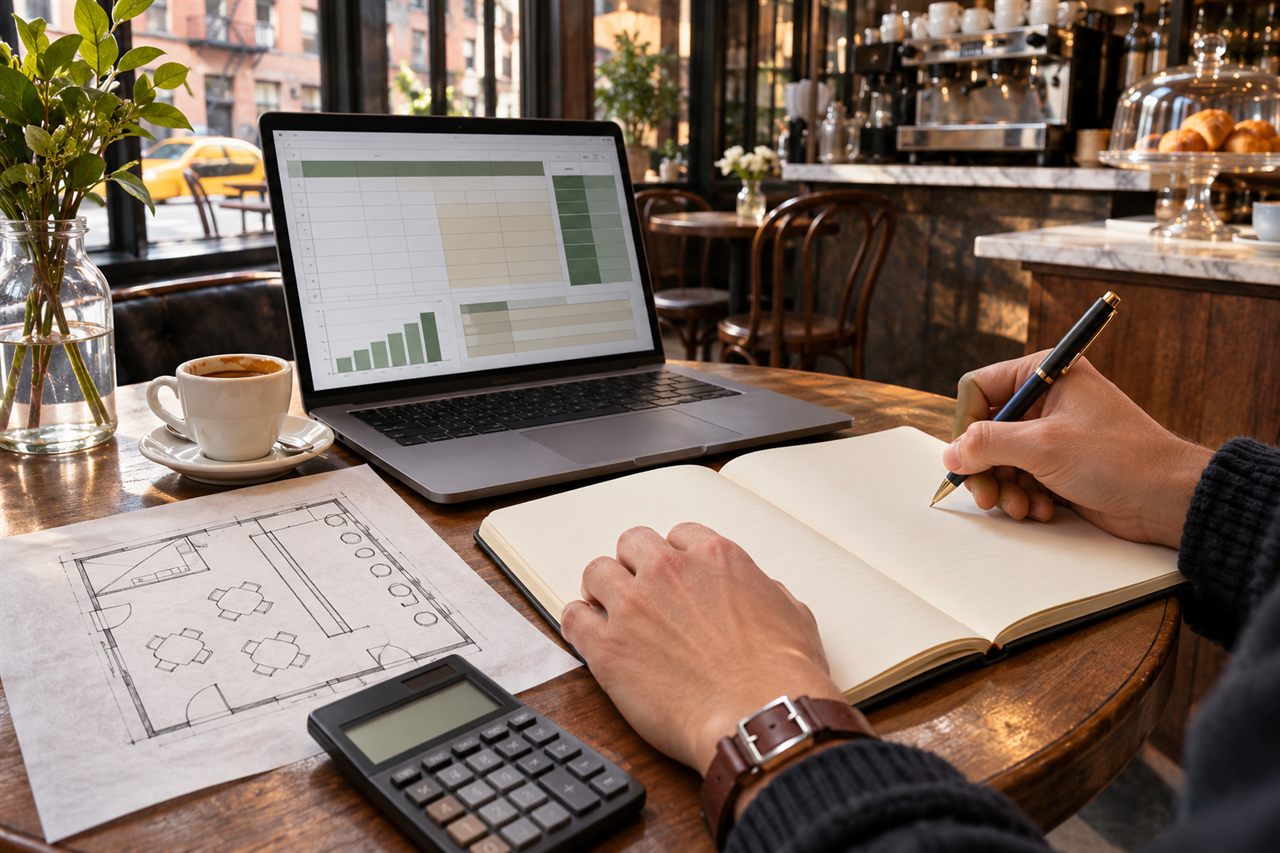
A coffee shop business plan should make an idea testable. It describes who will buy from you, why they will choose the shop, what each sale contributes, what the premises and team cost, and how cash lasts through a slow opening. It is a working document rather than a decorative pitch. The example below is illustrative; actual rents, wages, permits, equipment prices and demand must come from the specific location and current quotes.
Begin with a concise concept
Write one paragraph stating the shop format, likely customer, core menu, service style and trading hours. A commuter kiosk, neighborhood sit-down cafe and bakery-led coffee shop have different staffing, space and throughput requirements. Define what makes the offer distinct without claiming every resident will become a customer. The U.S. Small Business Administration business-plan guide includes company description, market analysis, organization, service line, marketing and financial projections. Use its structure as a checklist, then adapt it to the shop you actually intend to run.
State what you will not sell at launch if that keeps operations manageable. A short menu can make training, waste control and equipment planning easier. Identify the drinks that require an espresso machine, filter setup, refrigeration or food preparation. If you want to add seating, takeout, catering or retail beans later, model each as a separate decision rather than assuming revenue with no added costs. A plan becomes more useful when it can be revised after customer interviews and supplier quotes.
Test the market and location
The SBA recommends market research and competitive analysis to identify customers and a genuine difference. Observe pedestrian patterns at the hours you propose to trade, note nearby alternatives and compare their menu, prices, speed and seating. Talk to potential customers without treating a handful of enthusiastic answers as guaranteed sales. Record the date, day of week and weather for observations. A location may look busy at lunchtime but quiet during the morning rush you hoped to serve.
Your target customer should be more specific than “people who like coffee.” Consider residents, office workers, students or visitors and what they need: speed, a place to sit, a particular drink style or food. If the space is in New York City, the NYC restaurant business resource warns that permitted use and zoning need checking. Do that before relying on a floor plan or signing a lease. In another city, consult the corresponding local authorities rather than copying NYC rules.
Build the operating model
Map the path from order to handoff. Estimate how many drinks one barista can prepare in your actual layout, then test that assumption during a pilot or training session. Include queue space, water, power, waste, deliveries, cleaning, storage and accessible circulation. Decide which food is made on site and which is bought in, because that changes equipment and food-safety obligations. A menu that looks profitable on paper may fail if it slows every order during the busiest hour.
List the roles required for opening, peak and close, including a manager who understands food safety. In NYC, the Food Service Establishment Permit page sets out the permit process and references Food Protection certification. Costs and requirements can change, so use the current official page when budgeting. Include insurance, payroll taxes, benefits where applicable, utilities, software, payment fees, supplies and repairs. Do not treat the purchase price of an espresso machine as the entire equipment budget.
Model startup and monthly cash
Create a startup table with lease deposits, design, construction, permits, equipment, opening inventory, training, launch marketing and a working-capital reserve. Obtain written estimates when possible and show ranges for uncertain items. The SBA planning resources include startup-cost tools. Keep startup cash separate from monthly profit: a shop can look profitable per drink but still run out of money while paying build-out invoices and wages before steady demand arrives.
Build a monthly forecast for at least a base case and a slower case. Revenue should be visits multiplied by items per visit and average price, with sales tax treated correctly for the local context rather than as revenue. Direct cost includes coffee, milk, food, cups and other consumables. Fixed costs include rent and many recurring expenses that arrive even on a slow day. Show when each cash payment is due. If the result depends on implausibly high daily transactions from the first week, revise the concept or funding plan.
Use a transparent break-even example
For illustration only, imagine monthly fixed costs of $20,000 and an average contribution of $5 per transaction after variable costs. The simple break-even volume is 4,000 transactions per month, or roughly 133 per day over 30 days. The SBA break-even calculator explains this fixed-cost and contribution logic. This is not a prediction for any NYC shop: labor may vary with volume, tax treatment differs, and the average order mix will change. Use your own quoted costs and realistic trading days.
Test sensitivity. If the contribution falls to $4, the same fixed costs require 5,000 transactions; if the shop trades 26 days, that is about 192 per day. Conversely, a higher ticket does not help if it requires more expensive ingredients or longer service. Put the formula beside the assumptions so a reader can change one number and see the effect. A lender or partner should be able to trace every figure to a source, quote or clearly marked estimate.
Marketing and milestones
Describe how nearby customers will learn about the shop and why they will return. A sign and social account are tactics, not a complete strategy. Consider visibility, opening-week service quality, local partnerships, accurate map listings and a reason to try again. Budget for each activity and define a measure: repeat visits, morning transactions, average ticket, waste or customer feedback. Avoid buying ads before the premises and operations can deliver the promise.
Set milestones that can be checked: site feasibility, lease review, permit application, build-out completion, equipment installation, training, soft opening and a first three-month review. Assign owners and dates, with a contingency if one slips. The plan should be updated when quotes, inspections or actual sales replace assumptions. Our opening sequence turns this plan into a practical order of work. A living plan is valuable even if no lender asks to see it.
Common questions
How long should a coffee shop plan be?
Long enough to show a coherent concept, market evidence, operating model and finances. The SBA offers both traditional and lean approaches.
A short plan with traceable assumptions is more useful than many pages of unsupported claims.
What numbers matter most?
Startup cash, monthly fixed costs, variable cost per transaction, realistic daily volume and the timing of payments all matter.
Show a slow case as well as a base case so the plan does not depend on instant success.
Can I use a generic template?
Yes, as an outline. Replace generic assumptions with evidence about the specific shop, location and service style.
Check local rules and current supplier quotes rather than copying another cafe's permit fees, rent or staffing assumptions.
Is a business plan a guarantee of profit?
No. It is a way to expose assumptions before committing money and to compare actual performance with expectations.
Update it when demand, costs or regulations change. A clear plan can reveal that an idea needs a different location or format.
This article draws on published brewing guidance and explains common preparations. It does not claim a hands-on equipment test, a universal recipe or a health benefit. Check the exact cafe menu and equipment instructions for your own cup.