
FIKA NYC / THE COFFEE JOURNAL
Ginger ale and orange juice: a simple sparkling mocktail
Mix a citrus-and-ginger mocktail with clear ratios, optional fresh ginger and label-based sugar choices, then serve it while the bubbles last.
Originally published Editorially updated
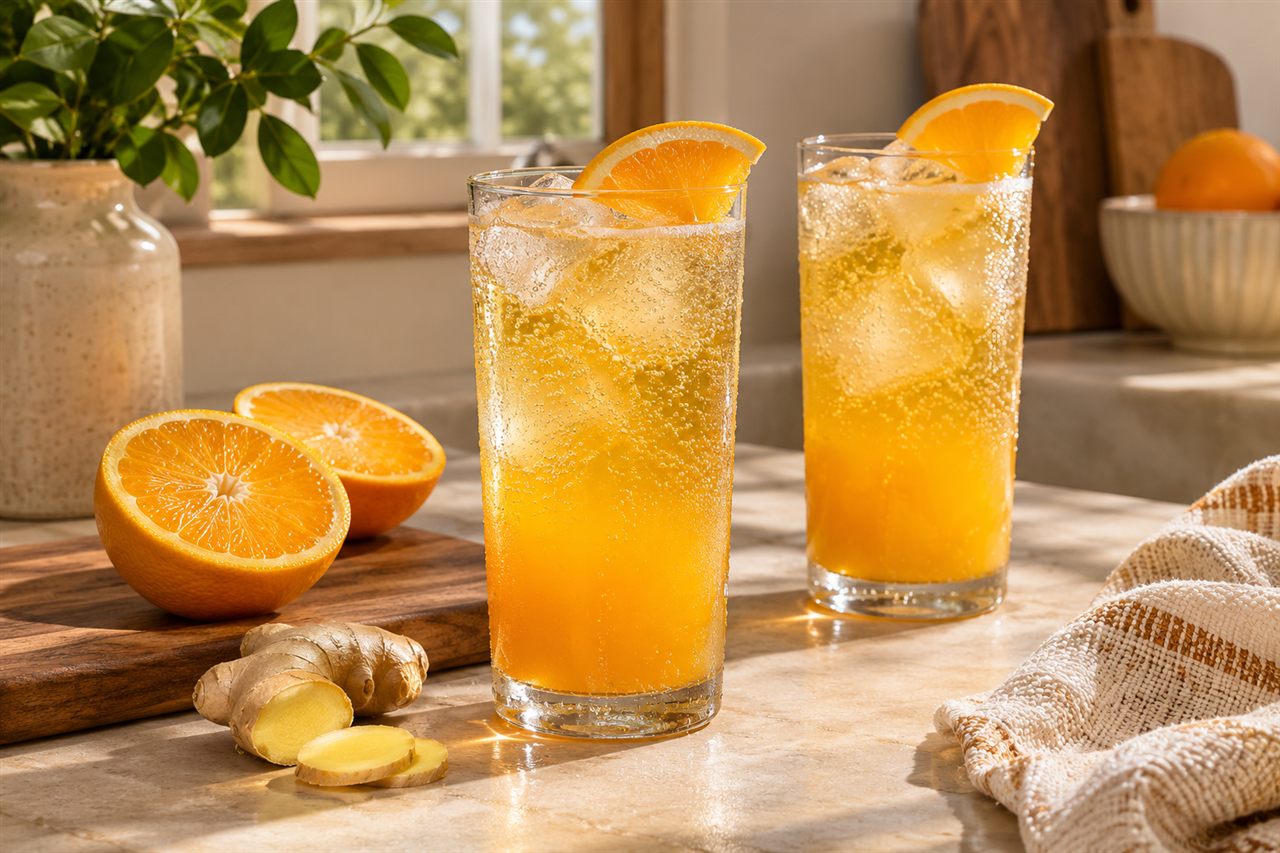
Ginger ale and orange juice make a quick nonalcoholic mixed drink. A good starting ratio is one part chilled orange juice to two parts ginger ale, poured over ice just before drinking. The finished flavor depends strongly on the soda: some brands are mild and sweet, while others are sharper or use different sweeteners. Make a test glass before mixing a pitcher.
The two-ingredient starting glass
Fill a tall glass with clean ice, pour in four fluid ounces of chilled ginger ale and two fluid ounces of chilled orange juice, then stir gently once. Add an orange wedge if desired. This makes one modest glass before ice displacement. For a less sweet result, replace some ginger ale with chilled sparkling water rather than adding more orange juice automatically. For a stronger citrus flavor, try equal parts juice and ginger ale. Taste before adding sugar; many packaged components already provide ample sweetness.
The name “ginger ale” does not guarantee a particular amount of real ginger. Read the ingredient list of the brand you use. The FDA explains added sugars on Nutrition Facts labels, which helps you compare regular and reduced-sugar versions. A zero-sugar ginger ale may taste different because of its sweeteners, so a universal sweetness adjustment is not possible. State the soda choice if you share the recipe with someone who has an ingredient preference.
Adding fresh ginger without grit
If you want a more obvious ginger aroma, grate a very small piece of washed, peeled fresh ginger and squeeze its juice through a fine sieve into the orange juice before adding soda. Start with a few drops per glass; raw ginger can quickly overpower the drink. A juicer can process a small ginger piece, but you do not need one for this recipe. The original page used a large amount of ginger and extra sugar; a restrained addition makes the result easier to balance.
Keep the finely grated ginger out of the glass if you prefer a smooth texture. If using a ginger syrup instead, remember that it adds sweetness and may contain other flavorings. Check its label and start with less ginger ale or more sparkling water. A thin orange peel twist adds aroma without adding sweetness, but wash the fruit before cutting. The FDA advises rinsing produce under running water and avoiding soap on edible produce.
Make a small pitcher for guests
For four glasses, chill one cup of orange juice and two cups of ginger ale. Put ice in the glasses, pour the juice into a clean pitcher, then add the ginger ale immediately before serving. Stir only enough to combine. Do not make the fizzy mixture hours ahead: carbonation fades, and ice in the pitcher dilutes it. Keep extra chilled ginger ale sealed until needed. Offer sparkling water at the table for guests who want a lighter version.
A pitcher should be identified as nonalcoholic if it is part of a larger drink station. Use a separate jug and spoon from cocktails, and state the major ingredients. A small orange wedge can be a garnish, but do not use garnish color as the only way to distinguish drinks. If children or guests are choosing between options, an ingredient card is clearer. Serve small portions first because the soda's sweetness can be more noticeable after a few sips.
Flavor variations
A splash of pineapple juice makes the drink more tropical; a squeeze of lime sharpens it. Mint leaves can be bruised lightly in the glass. Each addition changes the balance, so keep the base ratio and adjust one variable at a time. If you want a darker, spicier drink, ginger beer may provide a different result, but check whether the product is nonalcoholic before calling the finished drink a mocktail. The names and formulations vary by brand.
If the orange juice has pulp, the soda may foam strongly when poured. Add the fizzy ingredient slowly down the side of the glass and leave room at the top. A smooth, pulp-free juice produces a clearer drink, while a pulpy juice gives more texture. Neither is inherently better. Fresh-squeezed juice can taste vivid but adds food-safety considerations; pasteurized packaged juice is convenient for larger groups and for guests who need a lower-risk option.
What the ingredients do and do not promise
This is a sweet, fizzy beverage rather than a health treatment. The original article suggested that ginger ale could reliably deliver medicinal ginger effects; that is not supported by the name of a soft drink. Product labels can show whether a beverage contains ginger and how much added sugar it has, but they do not convert a mocktail into a remedy. Choose it for its taste and adjust the ratio for your preferences.
Orange juice contributes fruit flavor, but a glass of juice is not interchangeable with whole fruit. The CDC explains the fiber benefit of whole fruit. A lower-sugar variation can use less soda, a no-added-sugar orange juice and sparkling water, but the final numbers depend on the actual labels and serving size. Avoid making universal nutritional claims about a recipe that can be mixed from many different products.
Clean preparation and serving
Wash oranges before slicing, use clean ice and a clean pitcher, and keep juice refrigerated until mixing. The FDA notes that unpasteurized fresh juice may carry harmful bacteria; pasteurized packaged juice is a straightforward choice for guests at higher foodborne-illness risk. If using fresh-squeezed juice, clean the fruit and equipment carefully, while recognizing that washing is not pasteurization.
Serve as soon as the soda is added. Refrigerate unused juice promptly according to FDA cold-storage advice, but do not expect a premixed fizzy batch to keep its bubbles. Discard a drink left warm for an extended period or handled by shared cups. The easiest way to preserve quality is to chill the ingredients separately and mix each glass when needed.
For a softer drink, use a smaller glass and plenty of ice rather than adding syrup. Taste it immediately after mixing, while the carbonation still changes the mouthfeel.
Common questions
Is ginger ale and orange juice alcoholic?
The two-ingredient recipe is nonalcoholic if the ginger ale you choose is a nonalcoholic soft drink. Check the product label.
If you replace ginger ale with ginger beer, check that label too; formulations vary. Keep any alcoholic variations clearly separate from a mocktail pitcher.
What ratio should I use?
Start with two parts ginger ale to one part orange juice. That gives the citrus presence without overwhelming the bubbles.
Change one part at a time. More juice makes the glass fruitier; sparkling water lightens the sweetness without adding another juice flavor.
Do I need extra sugar?
No. Taste the two packaged ingredients together first. Ginger ale and juice often supply enough sweetness.
If you use a reduced-sugar soda, adjust by taste rather than copying a recipe written for a different brand.
Can I make it ahead?
Chill the ingredients separately, but mix with ginger ale just before serving. The carbonation declines after mixing.
For a gathering, prepare the juice and garnishes ahead in clean covered containers, then add soda to each glass or small pitcher as needed.
This article draws on published brewing guidance and explains common preparations. It does not claim a hands-on equipment test, a universal recipe or a health benefit. Check the exact cafe menu and equipment instructions for your own cup.