
FIKA NYC / THE COFFEE JOURNAL
Milk and orange juice: a chilled Morir Soñando-style drink
Make a chilled orange-and-milk drink inspired by Dominican Morir Soñando, with a practical mixing order, variations and dairy safety notes.
Originally published Editorially updated
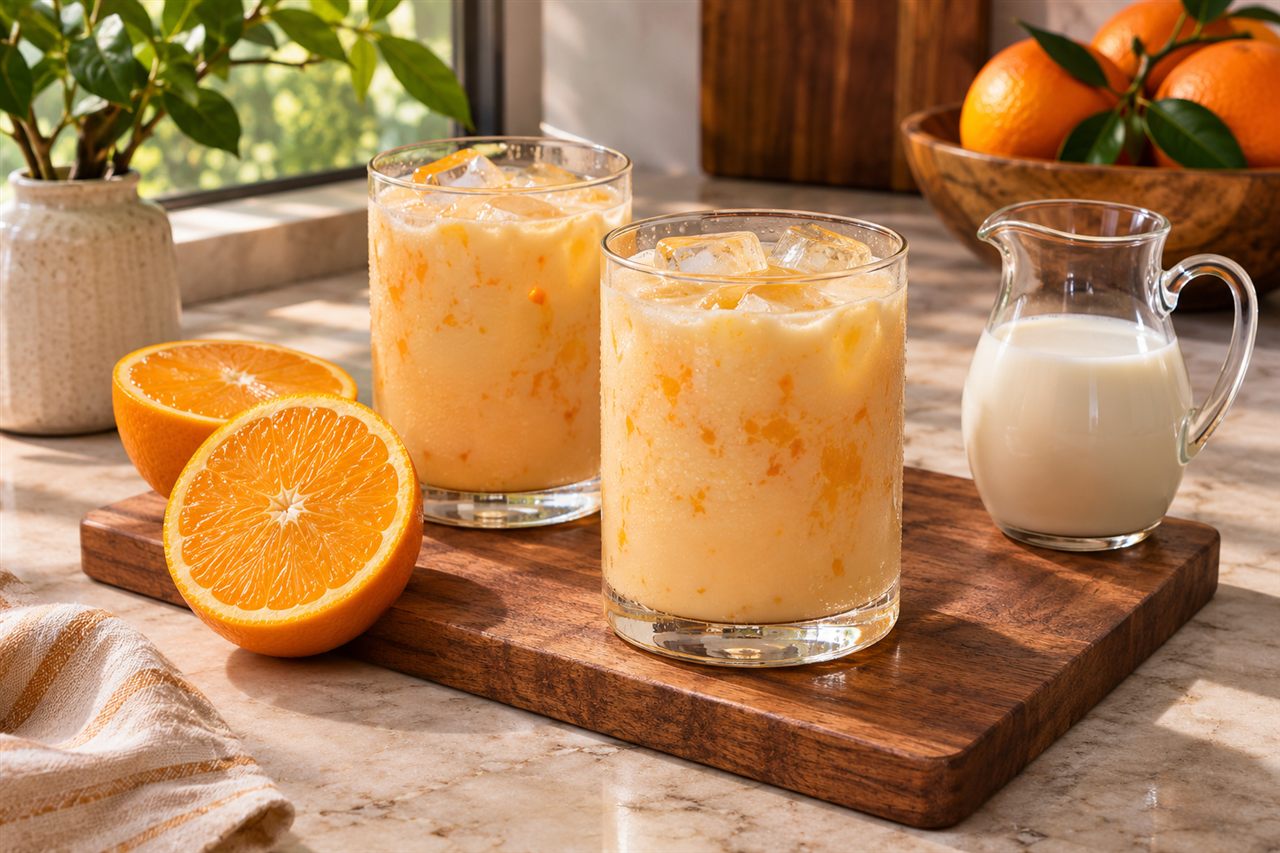
Orange juice and milk can make a creamy, refreshing drink when both are chilled and mixed just before serving. This version is inspired by Morir Soñando, a Dominican orange-and-milk drink. The name and tradition belong to Dominican food culture; there are many household variations. The recipe below offers a modest two-glass starting point and explains how to reduce unwanted curdling without claiming that one method is the only authentic one.
A simple two-glass recipe
Chill one cup of pasteurized orange juice and one cup of pasteurized milk until both are cold. Have two glasses with clean ice ready. Stir a teaspoon of sugar into the milk only if you want it sweeter; taste the juice first because its sweetness varies. Pour the cold milk over the ice, then add the cold orange juice slowly while stirring gently. Divide evenly between the glasses and drink promptly. A splash of vanilla is optional, but the basic citrus-and-milk combination is enough to understand the style.
The Dominican Republic gastronomic guide includes Morir Soñando among its food and drink traditions. Some versions use evaporated milk or a different sweetness level. If you use evaporated milk, check whether it is sweetened or unsweetened, and dilute or sweeten to taste. This page is a practical interpretation rather than a definitive cultural recipe. Begin with small quantities so you can find a texture you like before making a pitcher.
Why the mixture can separate
Orange juice is acidic, and milk proteins can form visible clumps when exposed to acid. The Mississippi State University Extension food-science manual demonstrates how acid precipitates casein from milk. In a drink, temperature, acidity, type of dairy and mixing order influence what you see. Curdling is a texture issue and can happen even with fresh ingredients; it should not automatically be interpreted as proof that the milk was spoiled. Still, always check dates, smell and proper storage before mixing.
Cold ingredients and prompt service usually give a smoother glass than warm milk and a long wait. Add juice gradually rather than dumping it into a small amount of milk, and keep the mixture moving gently over ice. If it separates, stirring may improve appearance but cannot reverse protein changes completely. A blender can produce a frothy texture, but blending for a long time adds air and warmth. Mix a single serving first if the exact milk and orange juice brands are new to you.
Choosing milk and juice
Use pasteurized milk and, for a lower-risk choice, pasteurized orange juice. Whole milk gives more richness than lower-fat milk; a plant-based alternative changes the taste and behavior and may still separate, depending on its ingredients. If using a fortified or sweetened alternative, read the label before adding sugar. A smooth, pulp-free orange juice makes a more uniform drink, while pulp adds texture. Neither is the only valid approach.
The FDA distinguishes added sugars from total sugars on labels. Milk and orange juice contain naturally occurring sugars; a sweetened milk alternative or added sugar contributes more. A can of sweetened condensed milk is not interchangeable with unsweetened evaporated milk, so read the label carefully. Taste the combined drink before adding syrup or extra sugar. If the orange juice is tart, a small measured sweetener addition may help, but too much can obscure the citrus.
A blender variation and a dairy-free option
For a frothier variation, put the cold milk, orange juice and a few ice cubes into a blender, pulse briefly, then pour and serve. Do not make a large batch far ahead, because the drink can separate and ice will dilute it. For a dairy-free version, try a chilled unsweetened plant-based beverage in a small test glass. It may taste pleasant but should be described as a variation, not the same traditional milk recipe. Ingredient labels matter for allergens.
A little vanilla or cinnamon can change the profile, but use restraint. If you want a stronger orange taste, add more juice a tablespoon at a time and watch the texture. If you want more creaminess, add more cold milk. The balance is personal because oranges vary in acidity and different milk products behave differently. Record the ratios if you find one you like; repeated small tests are more useful than a claim that a single formula never curdles.
Serve safely and promptly
Milk is perishable. The FDA advises keeping refrigerated foods cold and checking that the refrigerator is at 40°F or below. Keep milk and juice chilled until mixing, serve promptly and do not leave the finished drink sitting at room temperature for a gathering. The FoodSafety.gov recommends refrigerating leftovers promptly. Because this drink also contains juice, make only as much as you expect to serve.
Fresh-squeezed orange juice is unpasteurized. The FDA explains that untreated juice can contain harmful bacteria, especially concerning for some groups. Washing fruit and equipment is important but not equivalent to pasteurization. If serving someone who needs a lower-risk drink, select pasteurized juice and pasteurized milk. Label the drink clearly as containing dairy. A separate non-dairy drink should have its own clean tools and an accurate ingredient label.
Troubleshooting the finished glass
If the drink is too tart, try a sweeter orange juice or a little measured sweetener in the next glass. If it is too heavy, use less milk or more ice, knowing the ice will dilute it as it melts. If it separates immediately, check that both components were cold and that the juice was added gradually. Different products may behave differently, so a more stable result with one milk does not establish a universal rule.
If you see unusual clumps before orange juice is added, or the milk smells off, discard the ingredients rather than trying to hide the problem with sugar. When fresh ingredients produce a slightly flecked drink, decide whether the texture appeals to you. This beverage is at its best immediately after mixing. A clean glass, cold components and a small portion are more reliable than elaborate blending or long storage.
Common questions
Is mixing milk and orange juice safe?
It can be made as a drink using sound, pasteurized ingredients and clean equipment. The acid may change milk protein texture even when the milk is fresh.
Keep both components cold, serve promptly and discard spoiled or improperly stored ingredients. Use pasteurized juice when lower foodborne-illness risk matters.
How can I reduce curdling?
Chill the milk and juice, use plenty of ice and add the juice slowly while stirring. Make a small test serving because products differ.
These steps may improve texture but cannot guarantee a perfectly smooth drink with every orange and milk combination.
Can I use evaporated milk?
Yes. Evaporated milk appears in some versions of Morir Soñando. Choose the product intentionally and adjust the sweetness and dilution.
Unsweetened evaporated milk is different from sweetened condensed milk. Read the label so the finished drink is not unexpectedly sweet.
Can I prepare a pitcher ahead?
The mixture is best made shortly before drinking because it may separate and the ice will dilute it. Chill the components separately instead.
For guests, measure the ingredients ahead, keep them refrigerated and mix small batches as needed in a clean pitcher.
This article draws on published brewing guidance and explains common preparations. It does not claim a hands-on equipment test, a universal recipe or a health benefit. Check the exact cafe menu and equipment instructions for your own cup.