
FIKA NYC / THE COFFEE JOURNAL
Pre-workout vs coffee: read the dose before training
Compare coffee with pre-workout supplements by caffeine, ingredient transparency, evidence, timing and personal tolerance using NIH and FDA guidance.
Originally published Editorially updated
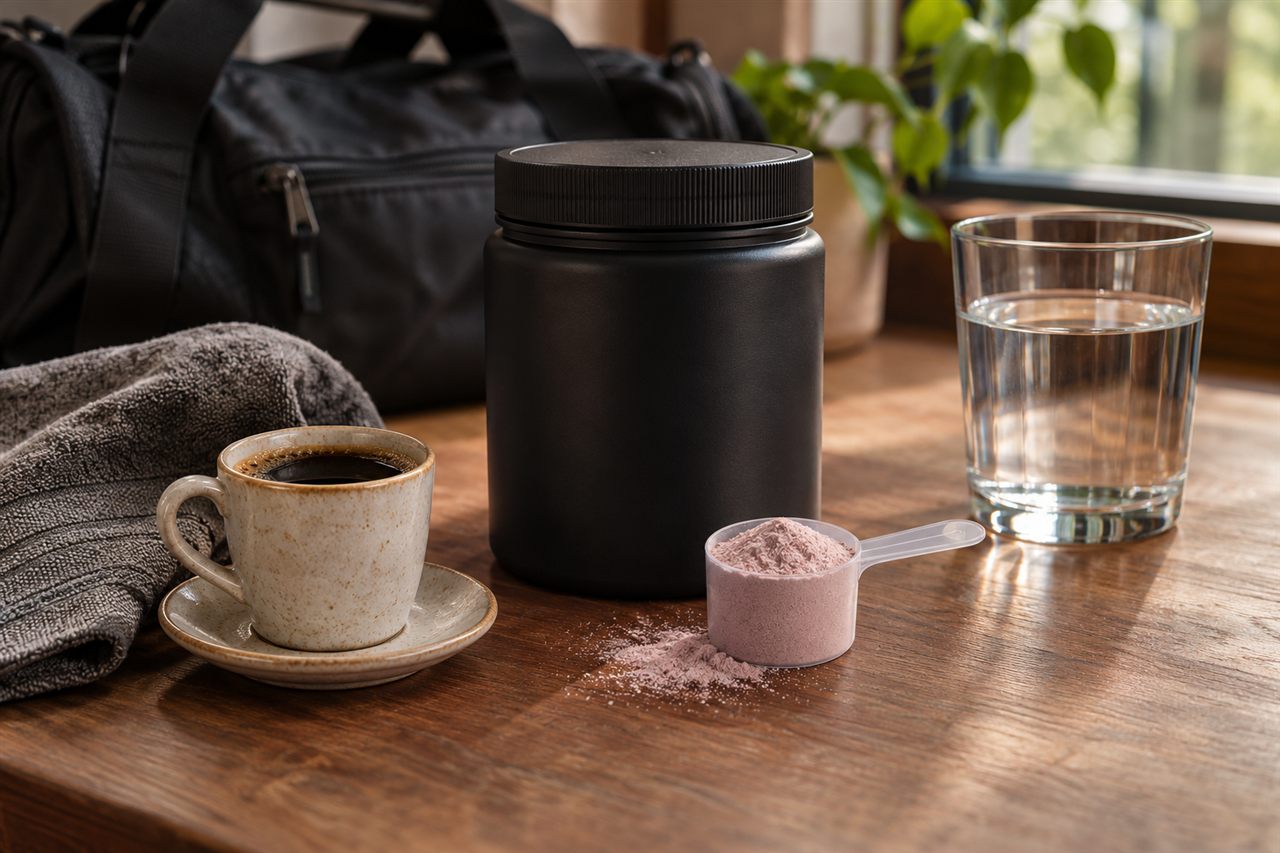
Coffee is a beverage with naturally occurring caffeine. “Pre-workout” is a marketing category for supplements that can contain caffeine plus other ingredients, or no caffeine at all. A scoop is not a standardized dose across brands. Before deciding which to use, read the exact label, count caffeine from the whole day and ask whether you need a stimulant for the session. This article does not promise weight loss, fat burning or a stronger workout.
Define the actual products
A black coffee is brewed from roasted beans and water. Its caffeine varies with bean, dose and cup size, as the National Coffee Association explains. A pre-workout powder may include caffeine, creatine, amino acids, sweeteners, flavors or other components. Some are stimulant-free. A package serving may be one or more scoops, so read the serving size, caffeine amount and instructions rather than assuming a scoop is universal. Do not use a photograph or front-of-pack phrase to infer the dose.
The NIH Office of Dietary Supplements reviews exercise supplements ingredient by ingredient. Evidence for one component cannot automatically be assigned to a multi-ingredient product or every sport. A proprietary blend may make amounts harder to interpret. If a label does not state a caffeine quantity, that uncertainty matters, particularly when the formula includes other caffeine sources. A plain coffee may be simpler in ingredients, but it is not automatically precisely dosed.
What caffeine can and cannot do
NIH ODS summarizes evidence that caffeine may improve some exercise performance, particularly endurance and intermittent long-duration activity, with individual variation. That is narrower than a promise that any caffeinated product makes everyone stronger or faster. Studies use controlled amounts and conditions; a retail scoop may differ. The FDA notes variation in caffeine sensitivity. An anxious or sleep-deprived person may experience more downside than benefit even when someone else tolerates the same amount.
The original article claimed coffee would reliably cause fat burning and weight loss. That conclusion does not follow from having a caffeinated drink before a workout. Training, food intake, sleep and many other factors matter. Do not use coffee or a powder as a replacement for a suitable exercise plan, hydration or meals. If you already enjoy a small coffee and do not need a supplement's other ingredients, it may be the simpler choice; if you are considering a supplement, evaluate its entire formula.
Dose and stacking
The FDA cites 400 milligrams per day for most adults as an amount not generally associated with negative effects, not as a performance target. NIH ODS discusses study doses that can approach or exceed what some individuals tolerate. Do not translate a study's milligrams-per-kilogram range into a personal recommendation without appropriate expert guidance. A pre-workout serving plus a large coffee or energy drink can add up quickly. Read labels and add the caffeine totals before consuming them.
Coffee-shop caffeine amounts are often estimates, while supplements may state a specific amount per serving. Neither number removes individual sensitivity. If you have palpitations, anxiety, high blood pressure, sleep trouble or a relevant medication or condition, seek professional advice before using stimulant products. The FDA notes that too much caffeine can cause symptoms such as insomnia, jitters, nausea and increased heart rate. More is not inherently more effective; NIH ODS notes that higher doses may increase adverse effects without further benefit.
Other ingredients and label quality
Creatine, beta-alanine and other common supplement ingredients have different evidence and uses. A short-term tingle is not proof of a useful workout effect. NIH ODS evaluates these components separately and notes limitations in many studies. Check amounts, third-party testing where relevant to your sport, and any interaction or contraindication that applies to you. Be skeptical of vague promises such as “explosive energy” without an understandable ingredient list.
Coffee can include milk, sugar or syrup, which changes the beverage but not the need to count its caffeine. Pre-workout products may include sweeteners, flavors and multiple stimulants. A person who prefers a plain drink may appreciate coffee's shorter ingredient list; a person considering a supplement needs to know what every scoop contains. The comparison is not “natural” versus “chemical.” All ingredients are chemicals, and the practical questions are dose, evidence, suitability and quality.
Timing, sleep and training routine
Caffeine close to bedtime can interfere with sleep, which matters for training and general well-being. An evening gym session may be a poor occasion for a high-caffeine pre-workout or a large coffee. Stimulant-free training is also a valid option. Drink water according to thirst and activity, eat appropriately for your session, and plan recovery. If you feel that a product is required to get through every workout, reconsider the routine rather than simply increasing the dose.
If you decide to use caffeine, start by understanding your existing intake. Keep the serving size consistent when assessing how you feel and avoid combining products on the first try. Do not dry-scoop a powdered supplement; follow its preparation directions. The benefit of a familiar cup of coffee may be convenience and taste. The possible benefit of a supplement depends on its actual formula and your circumstances, not its category name.
A decision process
Ask: what is the workout, what benefit am I seeking, what is in the product, how much caffeine is in the serving, and what have I already consumed today? Check the ingredient amounts against an authoritative source such as NIH ODS. If the information is unclear, do not guess. A small coffee, a stimulant-free option or no product may be more suitable than an unmeasured scoop. Medical or sports-dietitian advice is appropriate when health conditions, medications or competitive testing rules are involved.
The best comparison uses a specific coffee cup and a specific supplement label, not generic claims about categories. Costs also vary: compare price per actual serving rather than tub price or cafe menu price alone. If you prefer coffee but dislike its effect on your stomach, changing timing or choosing a smaller serving may be more useful than swapping automatically to a multi-ingredient powder. Keep the exercise itself at the center of the decision.
Common questions
Is coffee a substitute for pre-workout?
Coffee can provide caffeine, but it does not reproduce every ingredient in a particular supplement. Some pre-workouts contain no caffeine at all.
Decide which ingredient or effect you are seeking, then compare the actual labels and your own tolerance.
Will either product make me lose weight?
Neither beverage or supplement guarantees weight loss. The original page's fat-burning promises were too broad.
Use evidence-based training and nutrition guidance for weight goals rather than treating a pre-workout stimulant as a treatment.
Can I take a scoop and drink coffee?
The caffeine doses add together, and other stimulants may be present. Read the supplement label and count the coffee serving.
If you have a health condition or symptoms with caffeine, seek professional advice rather than stacking products.
Do I need caffeine to exercise?
No. Many people train without it. NIH ODS discusses possible performance effects in some contexts, not a requirement for a workout.
Sleep, food, hydration, training quality and recovery remain important whether or not you choose a caffeinated product.
This article draws on published brewing guidance and explains common preparations. It does not claim a hands-on equipment test, a universal recipe or a health benefit. Check the exact cafe menu and equipment instructions for your own cup.