
FIKA NYC / THE COFFEE JOURNAL
Red Bull vs coffee: compare one can with one cup
Compare a specific 8.4-ounce Red Bull can with brewed coffee by caffeine, sugar, serving size and ingredients without treating category averages as product facts.
Originally published Editorially updated
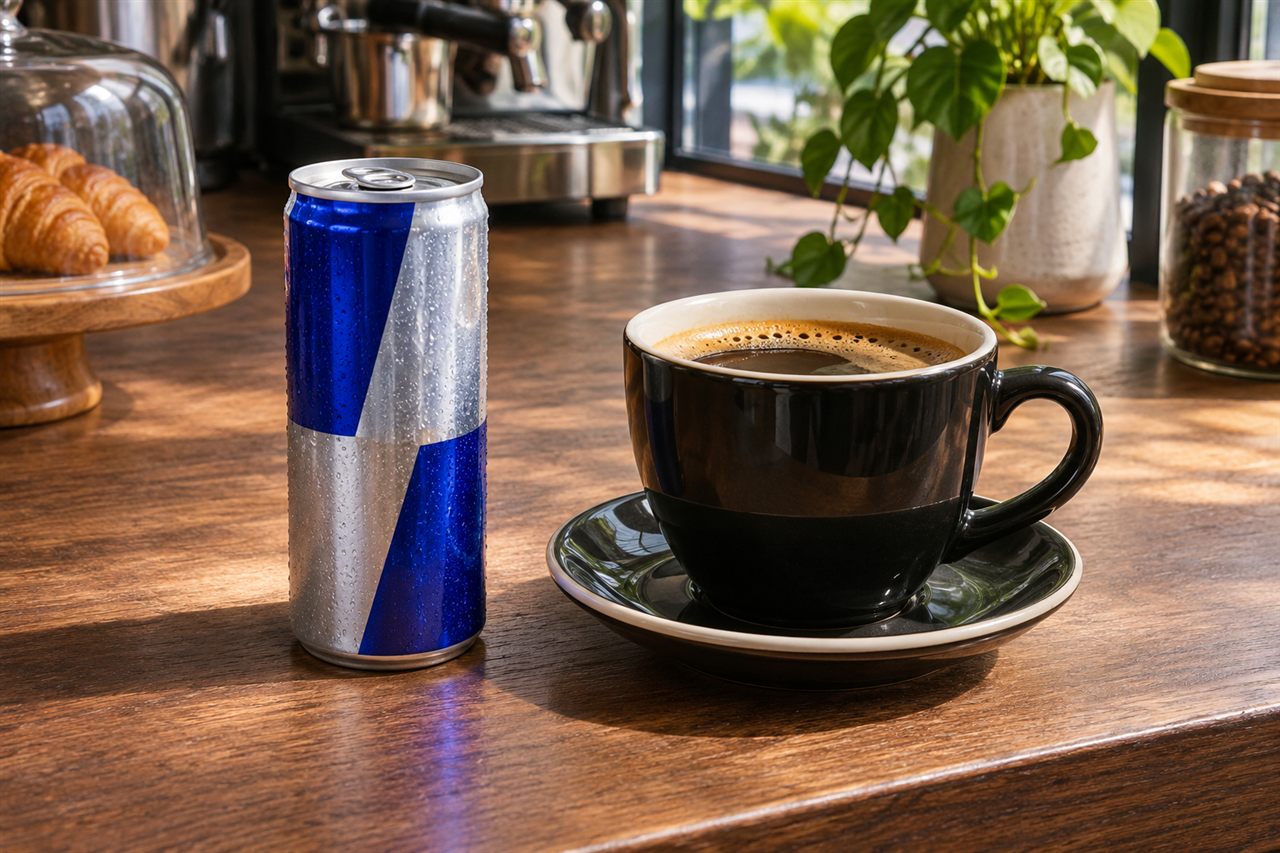
“Red Bull versus coffee” only becomes meaningful when both sides have a size and recipe. Here the branded side is one standard 8.4-fluid-ounce Red Bull Energy Drink can, as described by its maker. The coffee side is a plain brewed coffee, whose caffeine varies with bean, dose and cup size. A larger Red Bull can, Sugarfree formulation, espresso or sweetened latte would make a different comparison.
The specific Red Bull example
Red Bull's U.S. ingredients page states 80 milligrams of caffeine in an 8.4-ounce can of its original Energy Drink. That figure should not be applied to every size or variety. Check the current package if you are buying a different can. Other listed ingredients and nutrition information can vary by market and formulation. An official product page is useful for this particular example, while the can in your hand remains the best check before drinking it.
One can is one physical unit but still requires attention to serving information. A larger can may supply more caffeine, even if the flavor and color are familiar. Do not treat the brand name as a fixed milligram value. If you compare two products, write down the package size and total caffeine for each. This avoids the common mistake of citing “80 milligrams” beside a photograph of a larger container.
The coffee side varies
The FDA gives a broad 113–247 milligram range for 12-ounce non-specialty brewed coffee in its example table. That range is not a prescription for a particular cafe cup. The National Coffee Association explains caffeine variation with coffee species, dose, grind, method and serving size. A small coffee can be closer to the 80-milligram can; a large cup or multiple espresso shots may be much higher. To make a fair comparison, find the caffeine amount supplied by your coffee vendor or acknowledge that it is an estimate.
Coffee intensity is not a reliable caffeine measurement. A dark-tasting brew may have a lower total than a bigger, lighter-tasting cup. An Americano can contain one or more espresso shots, so its size alone does not tell you the dose. If you need a predictable number, a labeled ready-to-drink coffee product may offer more specific information than a freshly brewed cafe cup. Compare one complete serving on each side, not one ounce of one product with a whole container of the other.
Sugar and additions
An unsweetened black coffee has no added sugar, while a sweetened coffee drink can. The original Red Bull Energy Drink is a sweetened product, but alternative Red Bull varieties differ. Check the can's current Nutrition Facts panel. The FDA explains the difference between total and added sugars, so look at the Added Sugars line when comparing products. A tablespoon of syrup or sweetened creamer also counts toward the finished coffee's added sugar.
Do not call black coffee “healthier” without specifying the comparison. If the question is added sugar, black coffee will differ from a sweetened can; a dessert-like coffee can reverse that picture. If the question is caffeine, the cup size and recipe matter. The beverages also differ in taste, carbonation and other ingredients. A single winner label hides those different dimensions and the person-specific reasons for choosing one.
Other ingredients and claimed effects
Red Bull lists ingredients beyond caffeine, including taurine and vitamins. Coffee is an extracted beverage from roasted beans, though a cafe drink may also contain milk or syrups. The presence of a vitamin on a can does not establish a medical benefit from drinking it. Similarly, coffee's cultural and sensory appeal does not make every large cup appropriate for every adult. Focus on the formula and serving rather than a claim that either drink “gives wings” or is a wellness product.
The FDA states that caffeine from natural and added sources is handled similarly. This does not mean every ingredient in the two drinks is the same. It means the stimulant amount should be counted regardless of its source. If you are sensitive to a listed ingredient, read the entire label. If you are evaluating an exercise supplement, our pre-workout comparison covers a different product category with more variable formulations.
Timing and personal limits
The FDA cites 400 milligrams daily for most adults as an amount not generally associated with negative effects, but individual limits may be lower. One 80-milligram can contributes to the day's total alongside coffee, tea, supplements and medication containing caffeine. Sleep disruption, jitters, palpitations and stomach upset can be signals to reduce or avoid caffeine and seek medical advice as appropriate. Drinking a second can or coffee is not a neutral addition simply because the first serving felt mild.
The FDA also relays medical advice against energy drinks for children and teens. For adults who are pregnant, breastfeeding, taking medication or managing a condition, personal medical guidance matters more than a generic comparison chart. Choose a serving size with your full day in mind. An afternoon drink might affect sleep even if its caffeine number is lower than your morning coffee.
How to choose between them
Choose based on the actual cup or can: volume, caffeine, added sugar, other ingredients, taste and convenience. The 8.4-ounce Red Bull example gives a fixed 80-milligram caffeine figure from the maker; the brewed coffee side needs a recipe or vendor estimate. If you want a plain coffee flavor, coffee is the obvious fit. If you prefer a cold, sweet, carbonated drink, the can offers that experience. Neither preference requires a sweeping health verdict.
Recheck the label when formulation or size changes. Prices also vary and should be compared at purchase time. If you are reducing caffeine, a smaller coffee, decaf option or noncaffeinated drink may fit better than either full serving. If you are reducing added sugar, compare an unsweetened coffee with a sugar-free energy drink rather than assuming the brand's original product represents all variants. Clear definitions make the choice practical.
If you switch to a different Red Bull variety, begin the comparison again with that package. The brand name alone does not preserve the same nutrition information across products.
Common questions
Does an 8.4-ounce Red Bull have 80 milligrams of caffeine?
The maker's U.S. page states that for the original Energy Drink in that can size. Check the package you buy because other sizes and varieties can differ.
Do not apply the figure to a 12- or 16-ounce container without reading its label.
Does coffee always contain more caffeine?
No. Coffee varies with cup size and brewing recipe. A small cup may be close to the can; a large cup can be substantially higher.
Use a vendor figure when available and otherwise treat broad ranges as examples rather than exact cup data.
Is black coffee lower in added sugar?
Unsweetened black coffee has no added sugar, while the original energy drink is sweetened. A flavored coffee can also contain added sugar.
Compare the finished coffee's ingredients with the specific can's Nutrition Facts label.
Can I drink both on the same day?
Their caffeine amounts add together with other caffeine sources. The FDA's general adult figure is not a target for everyone.
Consider your sensitivity, sleep and any medical advice. Avoid assuming that two familiar drinks are harmless in combination.
This article draws on published brewing guidance and explains common preparations. It does not claim a hands-on equipment test, a universal recipe or a health benefit. Check the exact cafe menu and equipment instructions for your own cup.