
FIKA NYC / THE COFFEE JOURNAL
Carrot, orange and pineapple juice: a balanced recipe
Prepare carrot, orange and pineapple juice in a juicer or blender, tune the fruit-to-vegetable ratio, and handle the fresh drink safely.
Originally published Editorially updated
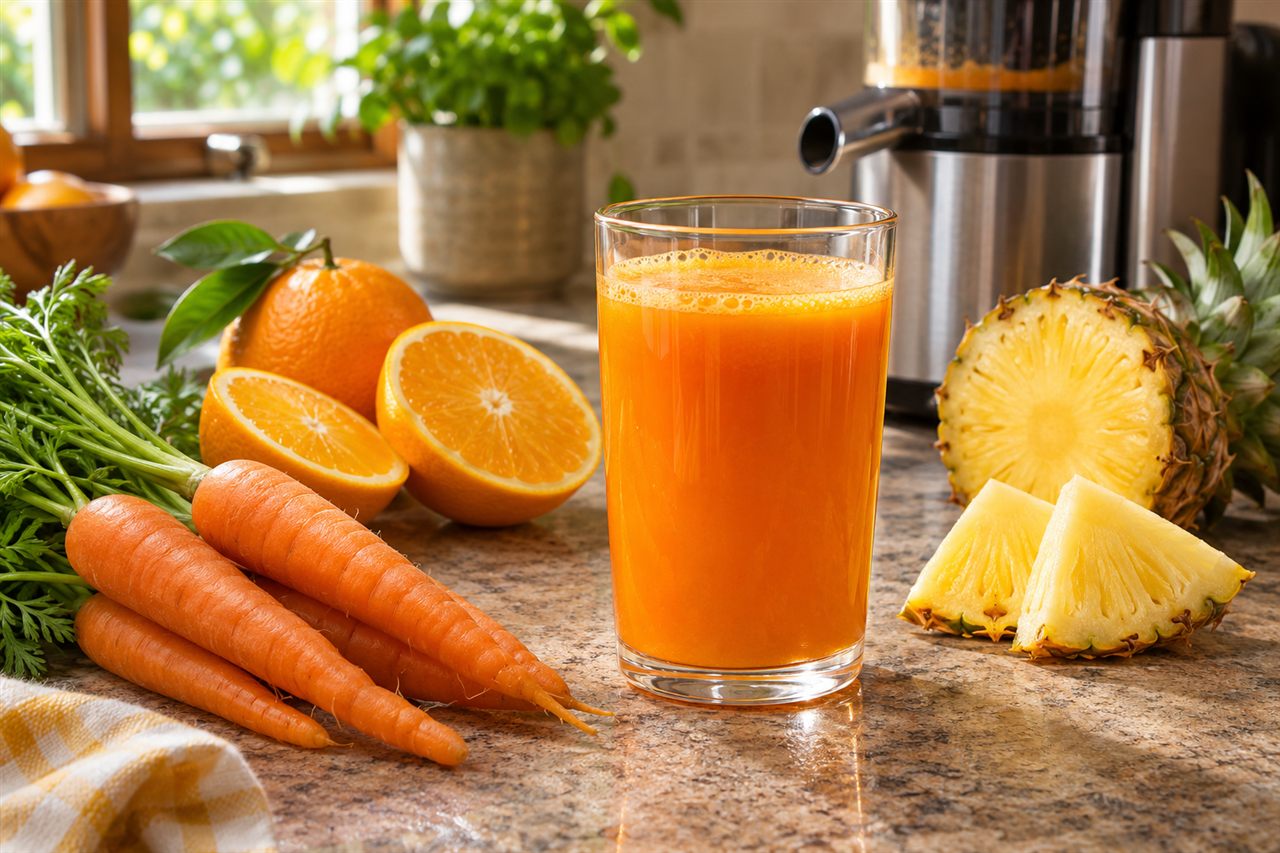
Carrot, orange and pineapple juice combines a mildly earthy vegetable with two sweeter fruits. The result can be adjusted to taste: more carrot gives a less fruit-forward glass, while more pineapple makes it sharper and sweeter. This guide gives workable amounts and two preparation routes. It does not rely on claims that juice detoxifies the body or treats a condition.
What to gather
For about two small servings, use three medium carrots, two medium oranges and about three-quarters of a cup of peeled pineapple pieces. Keep chilled water nearby for blending or dilution. Optional additions are a thin slice of ginger or a few drops of lemon juice, but start with the three main ingredients to learn their balance. Fruit sizes vary, so the finished quantity is approximate. A scale is useful if you want to reproduce a blend you like later.
Select firm carrots without slimy patches and sound fruit without visible mold. Wash all produce before peeling or cutting. The FDA recommends washing produce under running water and keeping it separate from raw animal foods. Scrub firm carrots with a clean produce brush if needed. Wash the orange and pineapple exterior too, because the knife will cross the peel. Remove pineapple skin and the orange rind; trim carrot ends, and follow your juicer's advice on whether peeling carrots is useful.
Method for a juicer
Cut ingredients to fit the feed chute. Peel oranges, remove visible seeds and process the pineapple according to your machine instructions. Feed carrot pieces between softer fruit pieces to help the flow. Stir the juice before tasting, because the first and last ingredients may collect unevenly. Add a splash of cold water if it is stronger than you want. Serve in small glasses over ice, or chill the ingredients beforehand to avoid unnecessary dilution.
Stop the machine if it struggles with fibrous pineapple or hard carrot; do not push with fingers or a utensil other than the supplied pusher. The output depends on your machine and how juicy the produce is. Clearer juice will still settle as it sits, so stir before each pour. Rinse the strainer screen promptly after use, checking the equipment manual for safe disassembly and cleaning.
Method for a blender
Cut the carrots into small pieces and add them with peeled orange segments, pineapple and enough water to allow your blender to circulate. Blend until the carrot pieces are very fine. A high-powered blender may give a drinkable smoothie-like texture; a less powerful machine may leave grit. Strain through a fine sieve if you prefer a thinner drink, pressing gently and discarding or using the pulp in another suitable recipe. Taste again after straining because texture changes perceived sweetness.
Do not expect a blender to produce the same liquid volume or clarity as a juicer. Keeping the edible pulp makes a thicker drink and retains more of the food's fiber. The CDC notes the value of whole fruits and vegetables for fiber; juice should not be treated as a complete substitute for eating produce. If you want a more substantial snack, the unstrained blend may suit you better than a clear juice.
Adjusting the flavor
Carrot sweetness varies. If the drink tastes too earthy, add a little more orange or pineapple before adding sugar. If it tastes too sweet, increase the carrot share or dilute with water. A small amount of ginger introduces heat; add it gradually and taste. Lemon or lime can bring brightness, but the oranges may already provide enough acid. Record the fruit-to-carrot ratio if you find a version you want to make again.
For serving, a plain glass shows the color well. Chilled glasses and ice make the drink refreshing, but ice melt changes the ratio over time. You could make a lighter drink with sparkling water added at the table. That is different from running carbonated liquid through a juicer. Use modest portions if you prefer to enjoy the fresh flavor without turning the recipe into a large, very sweet beverage.
Handling and leftovers
The FDA advises against using soap on produce and recommends clean hands, tools and surfaces. Fresh juice is unpasteurized, and the FDA warns that untreated juice can carry pathogens. Washing reduces risk but cannot guarantee safety. People at higher risk from foodborne illness should choose a pasteurized option if they want juice. Never use visibly spoiled fruit in an attempt to rescue it by juicing.
Prepare only what you need when possible. Place leftovers in a clean covered container and refrigerate promptly according to the FDA's cold-storage guidance. Stir before serving if separated, and discard it if there is spoilage or it has been left warm too long. Clean the juicer or blender immediately; carrot pigment can stain plastic parts, and dried fibers are difficult to remove. A careful cleanup is part of a repeatable recipe.
Plan the preparation and cleanup
Carrots are the firmest ingredient, so cut them into pieces suited to your machine before peeling the oranges. Keep a bowl nearby for scraps and a clean jug for the finished juice. If using a blender, very large carrot chunks can remain gritty; smaller pieces help it reach an even texture. If using a juicer, alternate firm and soft ingredients rather than pushing a mass of pineapple through at once. Never bypass the safety lid or use a hand to clear a chute.
After pouring, disassemble the appliance according to its manual and rinse parts that contact juice. A soft brush can help remove fibers from a screen, but avoid damaging delicate mesh. Wash the board and knife, particularly if you prepared other foods on them. Dry seals and containers thoroughly before storing them. The recipe is convenient when you make only the amount you will drink and clean as you go; a very large batch creates more storage and food-safety decisions without improving the flavor.
If you are making this for someone else, ask about ingredient preferences and allergies before serving. The orange and pineapple are prominent, but the carrot may be less obvious by taste. State the ingredients plainly. A transparent recipe helps guests make their own choices, including whether they prefer a smaller serving or an unstrained blended version. The same courtesy applies when adding ginger, lemon or other optional ingredients.
Common questions
Can I make this without pineapple?
Yes, but the flavor changes. Add a little more orange to the carrot base, then taste. The pineapple supplies tropical sweetness and acidity, so the two-fruit version will be simpler.
The carrot share is easy to adjust. Make the first batch with the listed balance, then add carrot or citrus gradually to the next one.
Should I peel the carrots?
Wash and scrub them first. Peeling is a preference and may depend on the condition of the carrots and your machine instructions. Trim damaged areas and discard spoiled carrots.
If peeling, still wash the carrot first. A peeler and knife can transfer material from the surface to the edible portion.
Is carrot juice a replacement for vegetables?
A juice can be one way to use produce, but straining removes pulp and some fiber. The CDC encourages whole fruits and vegetables; include those in your routine too.
An unstrained blender version retains the edible pulp. Offer it as a texture option alongside whole produce rather than treating clear juice as identical.
How do I keep the color from separating?
Separation is normal for fresh mixtures. Stir immediately before serving. Make small batches, keep leftovers covered and cold, and discard any juice that has spoiled.
Color can change as the mixture sits. Separation alone is normal, but an off smell or visible spoilage is a reason to discard it.
This article draws on published brewing guidance and explains common preparations. It does not claim a hands-on equipment test, a universal recipe or a health benefit. Check the exact cafe menu and equipment instructions for your own cup.