
FIKA NYC / THE COFFEE JOURNAL
Tomato juice recipes: fresh, herbed and spicy
Make three tomato juice variations with a juicer or blender, balance acidity and seasoning, and follow guidance for handling cut tomatoes.
Originally published Editorially updated
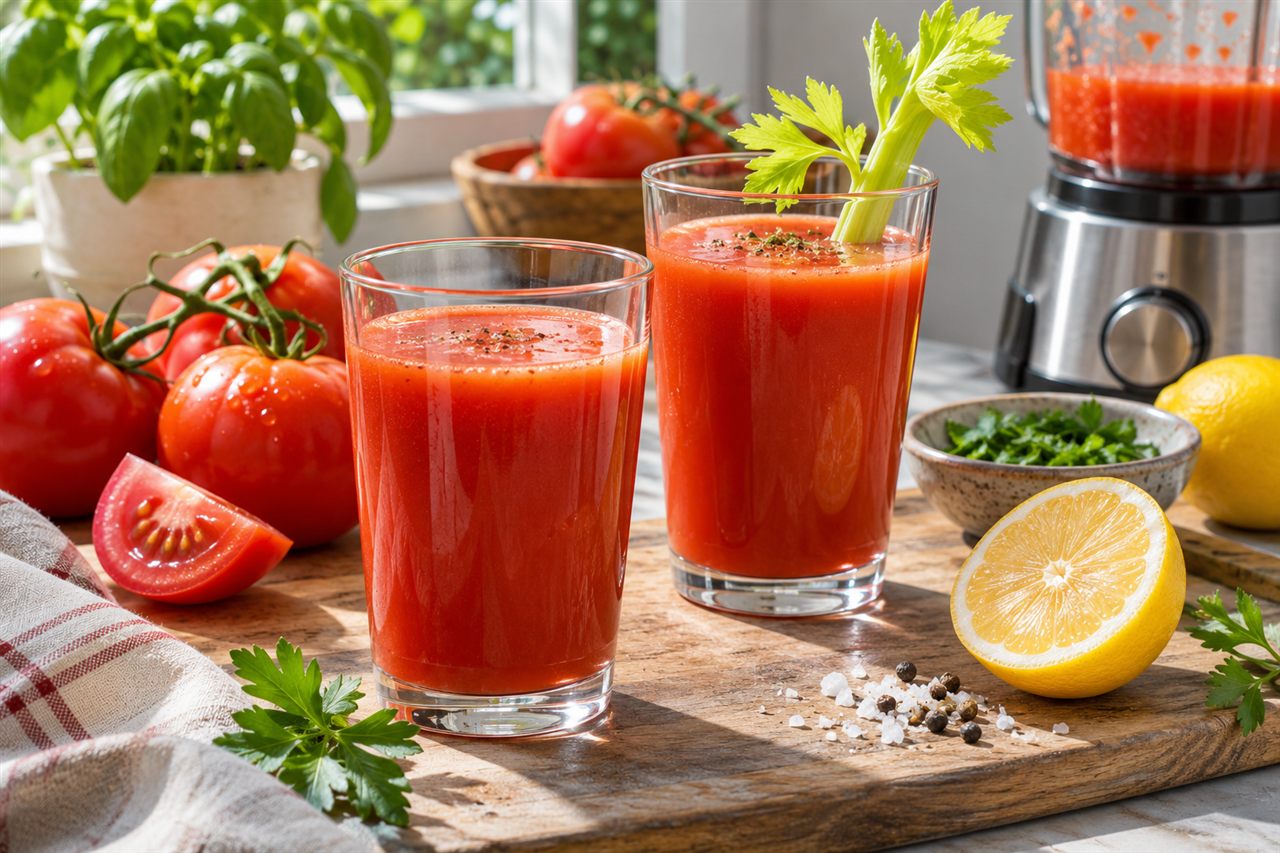
Fresh tomato juice is a versatile savory drink. It can be light and plain, fragrant with herbs, or seasoned with a little heat. Ripe tomatoes have different sweetness, acidity and water content, so the amounts below are starting points rather than fixed yields. These recipes are designed for home preparation and prompt serving, with extra attention to handling cut tomatoes safely.
Base recipe: tomato and lemon
For about two small glasses, use four medium ripe tomatoes, a squeeze of lemon and a small pinch of salt if you like. Wash the tomatoes under running water, remove stems and damaged spots, and cut them into pieces that fit your machine. The FDA produce-cleaning advice says to use running water, not soap or detergent. Wash the lemon before cutting it too. Start without salt so you can judge the tomato flavor; add seasoning only after tasting.
A juicer gives a thinner drink. Feed tomato pieces slowly and stir the collected juice, since pulp and liquid may separate. For a blender, process the chopped tomatoes until smooth, then strain through a sieve if you want a clear texture. Do not force a hot cooked tomato mixture through a sealed blender; these are fresh recipes. Chill the tomatoes before preparation or serve the juice over ice. Lemon brightens the flavor but should not be treated as a food-safety step.
Herbed version: tomato, celery and basil
Use the same tomato base, then add one celery stalk and three to five basil leaves. Wash the celery carefully along its ribs and rinse the basil. Juice the celery with the tomatoes or blend it in small pieces. Add basil at the end: gently bruise it and stir into the finished drink for a subtle scent, or blend the leaves for a greener, stronger result. A small squeeze of lemon can help balance a particularly sweet batch.
If you strain the blended mixture, the basil character may become more subdued. Taste before adding more leaves, because basil can dominate. A cucumber wedge is another optional addition when you want a lighter, cooler drink. This version is useful when tomatoes are very ripe and you want savory freshness without making a thick sauce. Serve with a celery stalk only if it is clean and intended to be eaten.
Spicy version: tomato, pepper and lime
Start with four tomatoes and add a tiny piece of fresh chili or a few drops of hot sauce, plus a little lime juice. Process the tomatoes first, then add heat gradually in the glass. That way one overly strong pepper does not spoil the whole batch. If you use fresh chili, wash it, handle it carefully and avoid touching your eyes. Remove seeds and membranes if you want a gentler flavor, though heat varies by pepper.
A pinch of black pepper or a little grated horseradish can make a different savory drink. Keep the seasoning restrained if you want to taste the tomatoes. Salt is optional and should be added after tasting; bottled tomato juice and prepared hot sauce may already contain it. This is a nonalcoholic recipe and works well chilled. A thin cucumber slice or basil leaf makes a simple garnish without adding another strong taste.
Texture and practical equipment choices
Tomato flesh contains seeds, skin and pulp. A juicer will remove much of that material, while a blender will keep it unless you strain. A fine sieve gives a smoother drink but reduces yield. If you prefer a thicker, almost gazpacho-like sip, do not strain; blend until the texture is even and add chilled water by the tablespoon if needed. Do not call a chunky blend clear juice. Choose the texture that makes the ingredient pleasant to drink.
A hand blender can work in a deep jug if you cut tomatoes first and protect the counter from splashes. Clean the jug, screen, seals and cutting board promptly; tomato residue can dry into crevices. Glass or stainless-steel storage containers may be easier to clean of color and odor than some plastics. If you use a juicer, read its instructions for soft produce; some machines benefit from alternating tomato with celery or cucumber to keep the flow moving.
Handling cut tomatoes and fresh juice
The FDA gives specific handling guidance for cut tomatoes because cutting changes how they should be managed. Keep cut tomatoes and prepared juice cold rather than leaving them on the counter. The FDA notes the risk of untreated juice and identifies groups at higher risk of foodborne illness. Freshly made tomato juice is unpasteurized, even when ingredients were washed. For people who need a lower-risk choice, a pasteurized commercial product may be preferable.
Make a small batch for immediate serving. Transfer any leftovers to a clean covered container and refrigerate promptly, following FDA storage advice. Discard a drink that has been left warm too long or shows spoilage; extra acid or spice is not a substitute for safe handling. If you prepare herbs and peppers in advance, keep them clean and cold too. Flavor is usually best when you season each serving just before drinking.
Selecting tomatoes for a drink
Ripe tomatoes are usually a better starting point than hard, underripe ones because they blend easily and have more developed flavor. Varieties differ: a meaty tomato can produce a thicker drink, while a juicy variety may give more liquid. If the first batch tastes flat, a little lemon or lime can brighten it. If it is very tart, a riper tomato or a small amount of cucumber may balance it more naturally than a large amount of salt. Taste before adding spices because they can conceal the fruit rather than improve it.
Choose tomatoes with intact skin and no mold or leaking areas. Wash them before cutting, then move cut pieces into a clean container or process them promptly. Keep knives and boards used for raw animal foods separate unless thoroughly cleaned. If you are making several variants, blend a plain base first and divide it into glasses before adding basil or hot sauce. That lets guests choose seasoning, and it avoids cleaning the blender between every recipe. Small measured additions are easier to adjust than one strongly seasoned pitcher.
An extra tomato can rescue a version that has become too salty or spicy, provided you have clean, sound fruit ready. For a drink that is too thick, add chilled water in small amounts and stir after each addition. These adjustments work best before ice melts into the glass. Taste the base again after it is cold, since temperature changes how strongly the seasonings register.
Common questions
Can I use canned tomatoes?
You can use a suitable canned tomato product, but it will taste different from fresh fruit and may contain added salt or other ingredients. Check the label and adjust seasoning gradually.
Check canned products for salt before seasoning. A canned base may be convenient when fresh tomatoes are out of season, but the flavor is different.
Should I strain tomato juice?
Only if you prefer a thinner, smoother drink. A blender leaves more pulp, while a juicer removes much of it. A sieve changes the yield, so taste again after straining.
Keep the pulp if you like a fuller savory drink. If a smooth texture matters, strain once and then adjust the seasoning after tasting.
Is lemon juice enough to preserve it?
No. Lemon affects taste, but a squeeze is not a validated preservation process. Keep cut tomatoes and fresh juice cold and prepare small batches for prompt use.
A squeeze of lemon is a flavor adjustment, not a preservation process. Follow food-safety handling for cut tomatoes and prepared juice.
Can I make it spicy without fresh chili?
Yes. Add a few drops of hot sauce to a finished glass and taste. Different sauces contain different amounts of salt and acid, so add them slowly.
A little sauce goes a long way, especially if it contains vinegar or salt. Season one glass first so you can compare it with the plain base.
This article draws on published brewing guidance and explains common preparations. It does not claim a hands-on equipment test, a universal recipe or a health benefit. Check the exact cafe menu and equipment instructions for your own cup.