
FIKA NYC / THE COFFEE JOURNAL
Green juice recipes: three practical blends
Try three green juice combinations with different flavor profiles, plus juicer and blender methods, ingredient preparation and safe storage.
Originally published Editorially updated
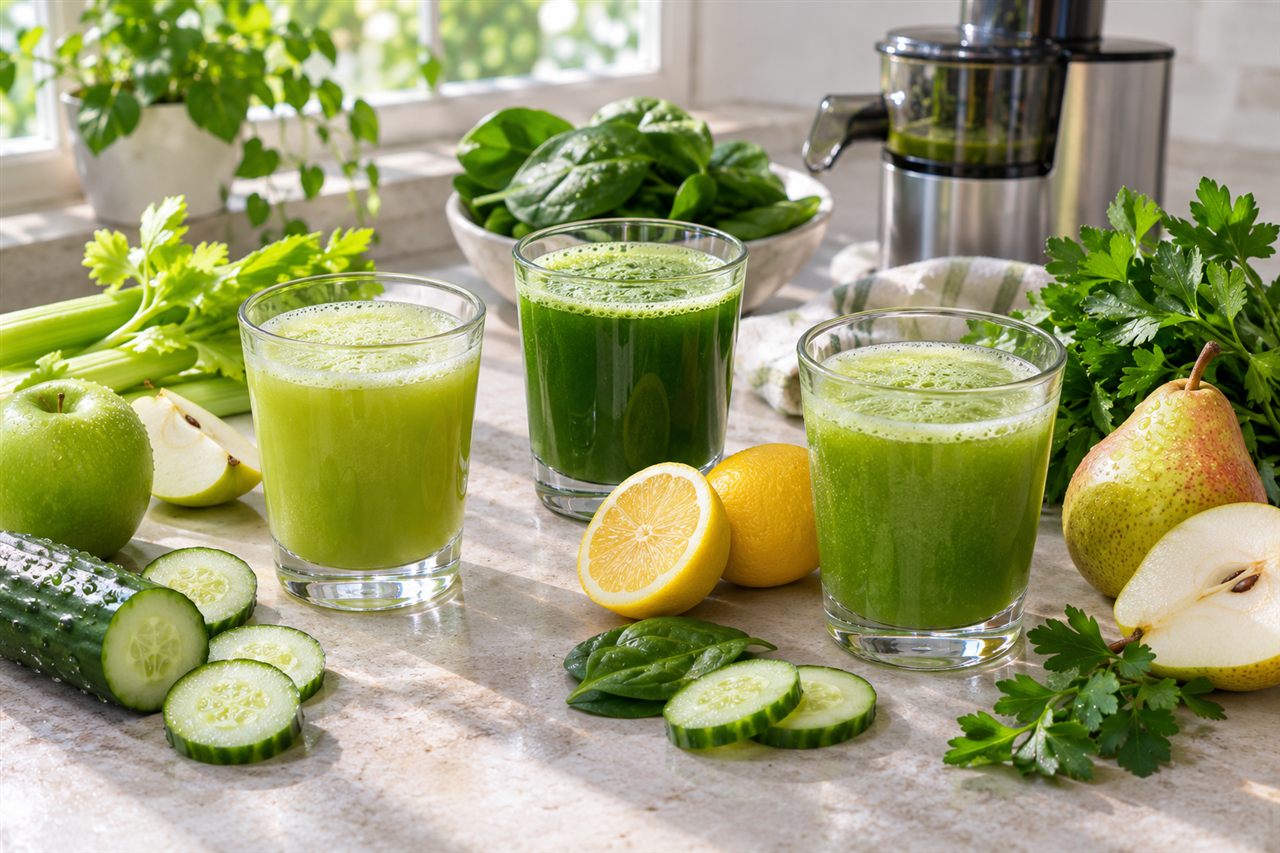
Green juice can mean many things, from a crisp cucumber drink to a sweeter blend with apple or pear. Rather than a single “detox” formula, here are three starting combinations you can adjust: citrus and cucumber, apple and leafy greens, and celery with pear. Each works in a juicer or blender. The colors and yields will vary with the produce and equipment you use.
Recipe one: cucumber, spinach and lemon
For about two small servings, use one medium cucumber, one generous handful of spinach, one green apple and half a peeled lemon. The cucumber makes a light base, apple softens the green taste, and lemon adds a brighter finish. Wash the cucumber, apple and greens thoroughly. Remove any damaged leaves; core the apple if your machine instructions require it. Start with only part of the lemon if you prefer less tartness, then taste before adding the rest.
In a juicer, alternate folded spinach with cucumber and apple pieces to help the machine catch the leaves. In a blender, add a splash of potable water and blend until the leaves are very fine. Strain if you want a clear juice, or leave it thick to retain edible pulp. The CDC describes the fiber advantage of whole fruit; blending without straining preserves more of that texture than a clear juice.
Recipe two: celery, pear and parsley
Use three celery stalks, one ripe pear, a small handful of parsley and half a cucumber. This version is herbal and less citrus-led. Start with a few parsley sprigs, since its flavor can dominate. Wash celery at the base where soil may collect, rinse the parsley well and cut the pear into pieces that fit the feed chute. A ripe pear should provide enough sweetness, but if it does not, add a little more pear rather than reaching for sugar immediately.
For a juicer, feed parsley between firmer celery and cucumber pieces. For a blender, chop celery finely and add a small amount of water, then blend longer than you would a soft-fruit drink. A fine sieve will remove fibers if desired. If the mixture seems too savory, a squeeze of lemon can brighten it. If it seems too sweet, more cucumber can make it lighter. Note the change so you can repeat it.
Recipe three: kale, green apple and ginger
Use two kale leaves with the tough central ribs removed, one green apple, one cucumber and a very thin slice of peeled ginger. This is the boldest of the three. Ginger can quickly overwhelm the other ingredients, so start with a small piece and increase only after tasting. Wash kale leaf by leaf, paying attention to folds, and wash the apple and cucumber before cutting. The FDA recommends rinsing produce under running water rather than using soap or detergent.
A juicer may process kale better if leaves are folded and fed alongside apple or cucumber. A blender may leave visible green flecks; that is normal, although you can strain them. The ginger can make a stronger impression after the drink sits, so taste again before adding extra. If the kale is too assertive, reduce it or replace one leaf with mild spinach in the next batch.
Choose a method and adjust the outcome
A juicer separates most pulp and gives a thinner drink. A blender pulverizes produce and can leave a thicker, more filling texture; straining it changes that. Neither method makes a recipe inherently restorative or a substitute for meals. Recipes with leafy greens also vary by leaf size, so use the amounts as a starting guide. Add cold water slowly if a blend is too intense. A pinch of ice can chill it, but taste after dilution.
Keep parts of leafy vegetables away from moving blades unless the appliance instructions permit them; always use the proper pusher. A slow juicer, centrifugal juicer and blender will produce different yields. That is why a precise number of ounces would be misleading here. If you are serving guests, offer a small sample of each blend and let them choose a favorite before making a larger quantity.
Food safety and sensible expectations
The FDA advises choosing sound produce and keeping it clean. Wash hands, surfaces and tools, and separate produce from raw meat. The FDA explains that unpasteurized fresh juice may carry harmful bacteria; washing is important but does not pasteurize. People at greater risk from foodborne illness may prefer pasteurized packaged juice. There is no good basis for promising that a green blend “detoxes” the body or cures an illness.
Make these drinks close to serving time. If you have leftovers, cover and refrigerate promptly according to FDA food-storage advice. Separation is expected; stir before pouring. Discard any drink left warm for an extended period or showing spoilage. Rinse juicer screens and blender seals promptly, as dried greens can cling to small parts. A small, freshly made batch is easier to enjoy and clean up after.
Make the blends your own without losing balance
Think of each recipe as a base, a green element and an accent. Cucumber or celery supplies much of the light liquid base; leafy greens contribute a more assertive plant flavor; apple, pear, lemon or ginger changes the finish. Change one element at a time. If the kale blend is too strong, reduce the kale before adding more fruit. If the cucumber blend seems flat, a little lemon may do more than another apple. This makes the recipe easier to tune without turning every glass into a very sweet fruit drink.
Color is not a quality score. Different apples and leaves produce different shades, and a blend may darken as it sits. Do not choose a drink by how vivid it looks in a photograph. Choose sound ingredients, prepare them cleanly, and judge the flavor and texture. If a child or guest dislikes the look of a green drink, serve a small sample in an ordinary glass rather than promising benefits. The most useful recipe is one someone enjoys enough to make safely and consistently.
Leafy greens can bring soil into a kitchen, so inspect the folds and remove damaged leaves before rinsing. Use a clean colander and allow the leaves to drain; this also prevents excess wash water from unexpectedly diluting the recipe. If a recipe calls for only part of a bunch, store the remaining greens according to the package or retailer guidance and use them in a meal rather than letting them spoil.
Common questions
Can I make green juice without a juicer?
Yes. Blend washed, cut produce with a little water. Drink it thick or pass it through a sieve for a thinner result. The texture and yield will differ from a juicer.
Begin with a small batch so you can learn the flavor. The amount of leafy greens is easier to increase in a second glass than to remove afterward.
Which green should I start with?
Spinach is mild, cucumber makes a light base, and kale can be more assertive. Start with the cucumber, spinach and apple blend if you want an approachable first glass.
Cucumber and apple soften the leaf flavor in different ways. You can also use pear in place of apple for a rounder sweetness.
Does green juice detox the body?
These are beverage recipes, not detox treatments. Use them because you enjoy the ingredients. Do not rely on juice to treat illness or replace a varied diet.
Claims about disease treatment need evidence and do not follow from a drink’s color. Enjoy the blend as food and seek medical advice for health concerns.
Can I prepare it the night before?
Fresh juice changes in flavor and appearance as it sits. Small batches served promptly are best. Cover and refrigerate leftovers promptly, following food-safety guidance, and discard anything spoiled.
Wash and prepare produce just before making it when practical. Refrigeration slows spoilage but does not turn unpasteurized juice into a sterile product.
This article draws on published brewing guidance and explains common preparations. It does not claim a hands-on equipment test, a universal recipe or a health benefit. Check the exact cafe menu and equipment instructions for your own cup.