
FIKA NYC / THE COFFEE JOURNAL
Pumpkin drinks: three easy recipes with cooked purée
Make pumpkin-and-apple, pumpkin-and-carrot and creamy pumpkin-banana drinks using cooked purée, with texture adjustments and storage guidance.
Originally published Editorially updated
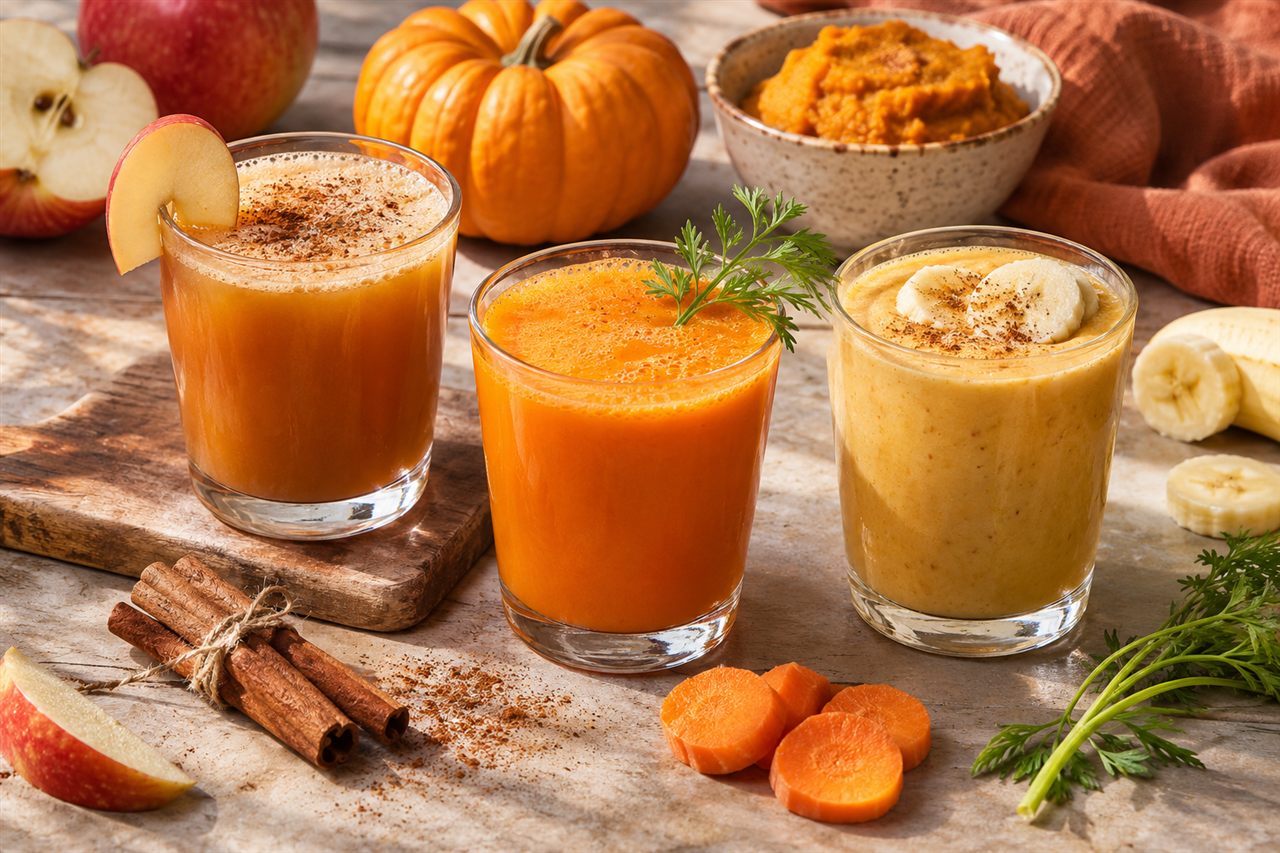
Pumpkin does not behave like a juicy orange or cucumber. Cooked pumpkin purée makes a thicker drink, closer to a smoothie or a spiced nectar than clear juice. These three recipes use plain canned pumpkin purée or cooked homemade purée so the results are practical to blend. They avoid the original page’s unsupported promises about skin and eyesight and focus on flavor, proportion and safe preparation.
Choose the right pumpkin base
Buy plain pumpkin purée rather than pumpkin pie filling if you want to control the spices and sweetness. Check the ingredient list: pie filling may already contain sugar and seasoning. The Oregon State University Extension describes canned pumpkin as a convenient year-round option and explains how to store it after opening. If making purée from a cooking pumpkin, wash its exterior, cook the flesh according to a reliable food recipe, then cool and refrigerate it promptly before using it in a cold drink.
A large carving pumpkin is not always the best choice for a smooth, flavorful purée. A small pie pumpkin or plain canned product is easier. Do not expect raw pumpkin chunks to yield a clear glass of juice in an ordinary juicer, and do not treat a purée drink as an equivalent to a raw juice. Label the drink honestly as blended pumpkin. The method lets you control texture and makes a modest amount without requiring a special appliance.
Pumpkin and apple spice
For two small servings, blend half a cup of plain cooked pumpkin purée, one cup of chilled pasteurized apple juice, a pinch of cinnamon and a few ice cubes. Taste before adding any sweetener. If the drink is too thick, add a little more juice or cold water; if it is too sweet, a splash of cold water or a small squeeze of lemon may balance it. Serve immediately with a light dusting of cinnamon if desired. This version is the most juice-like of the three.
Use pasteurized apple juice when serving guests who need a lower-risk choice. The FDA explains the risk of unpasteurized juice; a fresh-pressed product is not automatically safer because it is local or made that morning. If you prepare your own apples, wash them under running water and clean the equipment. The pumpkin purée provides body, so straining the blend would remove much of what makes this recipe distinctive.
Pumpkin and carrot blend
For two small servings, blend half a cup of cooked pumpkin purée with half a cup of chilled carrot juice and half a cup of chilled orange juice. Add water as needed for the texture you prefer. A tiny pinch of ginger or cinnamon is optional, but begin without both so the vegetables remain noticeable. If using homemade carrot juice, wash the carrots and equipment thoroughly. A blender can also process cooked carrot pieces, but that yields an even thicker drink.
The color may be vivid, but color is not evidence of a medical effect. Taste for sweetness before adding more orange. If the drink feels heavy, reduce the purée slightly next time rather than pouring in excessive juice. The CDC emphasizes whole fruits and vegetables for fiber; blending purée keeps a thicker texture, while juicing carrots separately removes much of their pulp. This is one way to enjoy the ingredients, not a replacement for a varied diet.
Creamy pumpkin and banana
For two small servings, combine half a cup of cooked pumpkin purée, one small ripe banana, three-quarters of a cup of chilled pasteurized milk or an unsweetened plant-based alternative, and a pinch of cinnamon. Blend until smooth. Add more cold milk by the tablespoon if needed. The banana is usually sweet enough without syrup, but taste the particular fruit you have. This is a smoothie-style drink, not a clear juice. Use clean ice for a colder result or chill the purée and banana first.
If using a plant-based alternative, read its ingredient and allergen labels and expect a different thickness. A spoonful of plain yogurt can make a tangier drink, but it also adds dairy. State the ingredients when serving others. A blender jar that has handled raw meat or allergens needs thorough cleaning before use. This version contains perishable milk, so serve it promptly and refrigerate ingredients until the moment of blending.
Adjusting texture and sweetness
Pumpkin purée is thick and can vary by brand or preparation. Start with the listed amount, then add liquid slowly until the blender circulates and the drink pours easily. If you add too much liquid, another spoonful of purée can restore body. A fine sieve is usually unhelpful because it removes the pumpkin itself. If you want a truly clear fruit juice, choose an apple or orange recipe instead. These are deliberately blended drinks.
Cinnamon, ginger and nutmeg bring autumn flavors, but a little goes far. A dusting is easier to correct than a teaspoon dumped into the jar. Compare packaged juices using the FDA added-sugars label guidance; some apple or carrot blends have additional sweeteners. Avoid treating the recipe name as a nutritional claim. A small glass can be satisfying because the purée gives more body than juice alone.
Storage and practical cleanup
Open pumpkin purée is perishable. The Oregon State Extension advises refrigerating opened canned pumpkin and gives a 3–4 day refrigerator window for the ingredient, but a finished drink also depends on the other ingredients and handling. Use a clean covered container for unused purée and follow the package if it is more restrictive. Keep milk-based drinks cold and serve promptly. Do not leave a blended pitcher at room temperature for an extended period.
The FDA recommends keeping the refrigerator at 40°F or below. Clean the blender lid, gasket and jar after use; pumpkin can cling under seals. If you make several versions, mix the apple version before the milk version or wash the jar between them. Freeze unused purée in a labelled food-safe container if you cannot use it soon, but do not freeze a completed milk drink and assume it will have the same texture after thawing.
Common questions
Can I put raw pumpkin in a juicer?
Some machines may process prepared raw pumpkin, but it is firm and relatively low in free liquid. The recipes here use cooked purée for a reliable blended drink.
Follow your appliance instructions and a reliable food preparation method if you experiment with raw squash. Do not expect the same texture or yield as orange juice.
Is canned pumpkin the same as pie filling?
No. Plain pumpkin purée generally contains pumpkin, while pie filling commonly includes sugar and spices. Check the label.
Using plain purée lets you control sweetness and seasoning in each drink.
Can I use homemade pumpkin purée?
Yes, if it is made from a cooking pumpkin and handled safely. Cook, cool and refrigerate it promptly before blending a cold drink.
A homemade purée may contain more or less water than canned pumpkin, so adjust the liquid gradually.
How should I store leftover purée?
Transfer opened purée to a clean covered container and refrigerate it. Oregon State Extension gives a 3–4 day refrigerator window for opened canned pumpkin.
Follow a more restrictive package instruction if present. Label and freeze unused purée if you need longer storage, rather than leaving it on the counter.
This article draws on published brewing guidance and explains common preparations. It does not claim a hands-on equipment test, a universal recipe or a health benefit. Check the exact cafe menu and equipment instructions for your own cup.