
FIKA NYC / THE COFFEE JOURNAL
Celery juice recipes: three crisp combinations
Try plain celery juice and two fruit-and-vegetable variations, with juicer and blender methods, flavor adjustments and food-safety advice.
Originally published Editorially updated
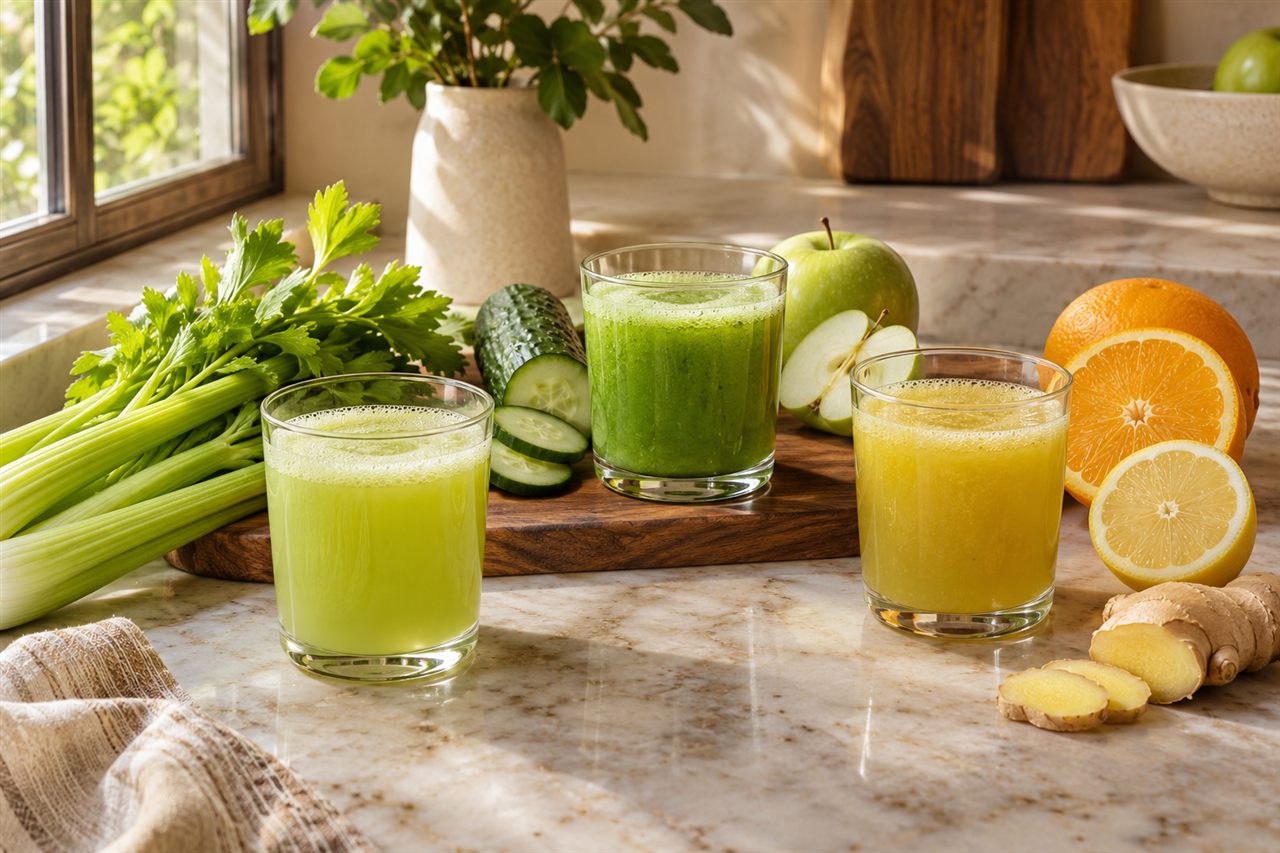
Celery juice has a clean, savory taste and a high-water base that pairs easily with cucumber, apple or citrus. It does not need a “detox” claim to be worth trying. These three combinations let you choose between a plain vegetable drink, a sweeter green version and a bright citrus version. Quantities are starting points; stalk size and machine yield vary.
Plain celery: learn the base flavor
For one or two small glasses, use about six medium celery stalks. Separate them, trim the base and leaf tips if damaged, and wash each stalk carefully, paying attention to the ribs where soil can lodge. Cut pieces that fit your juicer. Feed them gradually with the appliance's pusher, stir the collected liquid and taste before adding anything. The result may be pleasantly crisp, quite salty in impression or a little bitter depending on the celery. A squeeze of lemon is optional rather than required.
The FDA advises choosing sound produce and washing it under running water. Do not rescue wilted, slimy or moldy celery by juicing it. Clean the board, knife and machine before beginning. If you want a lower-pulp drink, strain it after juicing; if you like body, leave some fine pulp. Start with a small batch because freshly made celery juice changes in flavor as it sits.
Celery, cucumber and apple
For two small servings, combine four celery stalks, half a cucumber and one small green apple. Wash all three, remove damaged parts, and core the apple if your machine requires it. Alternate celery and apple pieces through the juicer, then finish with cucumber. The apple adds sweetness without making the drink taste purely fruity. A little lemon can sharpen a very sweet apple, but taste first. For a lighter drink, add a few tablespoons of chilled water after juicing.
With a blender, chop the celery finely, add diced cucumber and apple with enough water to start the blades, then process until smooth. The mixture will be thicker than juice from a machine. Strain through a fine sieve if you want a thinner texture. The CDC notes the value of whole fruit and vegetable fiber; retaining the edible pulp keeps a different texture from clear strained juice. Neither method makes the drink a substitute for eating vegetables.
Celery, orange and ginger
For a brighter version, use four celery stalks, one peeled orange and a very thin slice of fresh ginger. Juice the washed celery, then the peeled orange and ginger according to the machine instructions. Ginger varies in strength, so start with a small slice and add more only after tasting. If you prefer less sweetness, use half an orange and a little cucumber. A squeeze of lemon is possible but may be unnecessary once the orange is in the glass.
A blender version can include the orange segments and celery chopped into small pieces with a splash of water. Blend longer than you would a soft-fruit drink, then strain if the celery fibers bother you. Do not add orange peel or large ginger chunks. Keep the ginger addition obvious in the ingredient description if you serve someone else. This recipe is about balance and enjoyment, not the unsupported idea that ginger or celery will cure a condition.
Juicer and blender choices
A juicer separates most solids and produces a thinner glass; a blender keeps pulp until you strain it. Neither yields a fixed volume from a given number of stalks, and no appliance makes juice sterile. If your juicer struggles with long celery fibers, cut the stalks into short sections and follow the maker's instructions. Stop and unplug the machine before clearing a screen. For a blender, use enough water for circulation but add it gradually so the drink does not become unnecessarily thin.
Taste every recipe before adding salt. Celery can already taste savory and a salty garnish may overpower it. Chilling the ingredients beforehand is often better than using a large amount of ice that dilutes the drink as it melts. If you are preparing all three versions, wash the equipment between them or process the plain one first, then the apple version, then the ginger version. That order keeps each flavor recognizable.
Health claims and ingredient expectations
Celery is a vegetable, but juicing it does not create a proven detox treatment. The previous version of this page made broad claims about fluid retention and other outcomes that a recipe cannot support. Use these drinks as food if you like them. If a health condition, medication or dietary restriction makes ingredient choices important, seek advice from an appropriate clinician rather than relying on a juice recipe. Whole vegetables remain useful alongside any drink.
Packaged juices can differ substantially in fruit content and added sugar. Here, the only ingredients are those you choose, so state them plainly. If serving a child or guest, ask about preferences and allergies. Do not call a drink “celery only” if it also contains apple, orange or ginger. Clear naming helps people choose by taste and needs, and it makes a recipe more repeatable the next time you prepare it.
Handling and leftovers
Fresh juice is unpasteurized. The FDA explains the risk of untreated juices and highlights greater concern for some groups, including pregnant people, children, older adults and those with weakened immune systems. Washing produce and equipment reduces contamination but does not pasteurize the result. A pasteurized commercial choice may be better when lower risk is needed. Do not leave a jug on the counter while you clean the machine.
Serve promptly or transfer leftovers to a clean covered container and refrigerate according to FDA cold-storage guidance. Stir if natural separation occurs, but discard any drink that has been held warm too long or shows spoilage. Clean screens and seals soon after use; celery fibers can dry into them. Make small amounts until you know which combination you enjoy enough to repeat.
If you buy a whole bunch, store the unused stalks according to the package or retailer guidance and use them in cooking as well. A small juice batch avoids waste and makes cleanup easier.
Common questions
Do I have to drink celery juice plain?
No. Cucumber, apple and citrus are practical additions. Begin with the plain version once so you know what the celery contributes.
Then change one ingredient at a time, keeping a note of quantities if you want to reproduce a favorite.
Can I use a blender instead of a juicer?
Yes. Chop the washed celery, add a little water and blend well. Strain for a thinner drink or keep the edible pulp for a thicker one.
A blender can leave more fiber and texture, especially with celery. That is a preparation difference rather than a flaw.
Does celery juice detox the body?
A recipe cannot substantiate that claim. Drink it for flavor if you enjoy it, and keep eating a varied range of foods.
For a medical concern, speak with a qualified professional rather than using juice as a treatment.
How long can I keep it?
Fresh flavor is best soon after preparation. Cover and refrigerate leftovers promptly following food-safety guidance.
Separation alone is normal, but do not use that as a reason to keep juice that smells off, shows spoilage or was left warm too long.
This article draws on published brewing guidance and explains common preparations. It does not claim a hands-on equipment test, a universal recipe or a health benefit. Check the exact cafe menu and equipment instructions for your own cup.